


Home / Royals
Queen Elizabeth’s prime ministers: Inside British establishment’s most important relationship
Starting from Winston Churchill down to Liz Truss, Queen Elizabeth hosted a long line of prime ministers
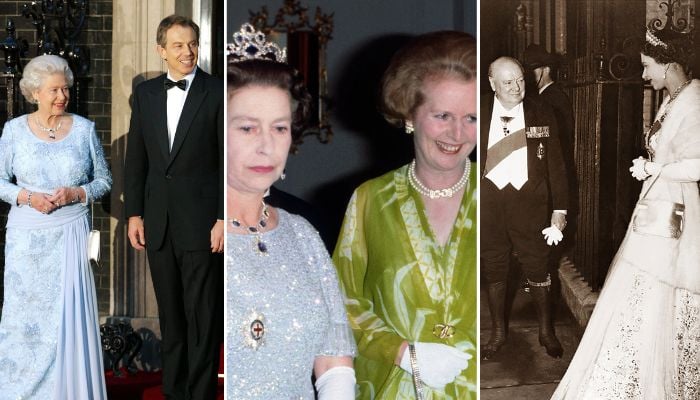
The United Kingdom has lived under a constitutional monarchy, supported by a prime minister, since at least the 18th century.
By the time Queen Elizabeth ascended the British throne, the role of a PM in the country was a well defined one.
According to a Government UK blogpost from September 2012, “The Queen has two prerogatives, to choose, or now to confirm, a new Prime Minister in office and to grant a dissolution of Parliament, triggering a general election.”
With Winston Churchill being the first of these leaders to pledge allegiance to her as a monarch, the Queen had hosted up to 15 prime ministers during the seven decades of her reign.
Here are those names and how Queen Elizbabeth’s relationship with them panned out:
Winston Churchill (1951-1955)
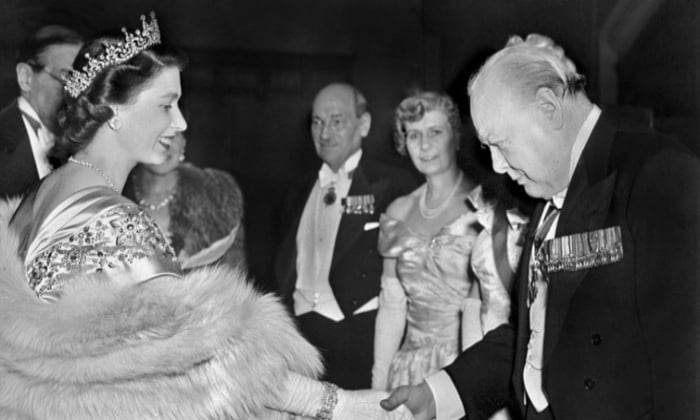
Having served her father, King George VI, before Queen Elizabeth inherited the Crown, Winston Churchill was not only incredibly fond of the Windsor house but also a staunch monarchist.
Though he did not think her experienced enough for the task at hand initially — being 51 years her senior — Churchill came to share a highly prosperous and warm relationship with the Queen, while in her farewell note to him upon his retirement, she wrote, “No other Prime Minister will ever for me be able to hold the place of my first prime minister, to whom both my husband and I owe so much and for whose wise guidance during the early years of my reign I shall always be so profoundly grateful.”
Anthony Eden (1955-1957)
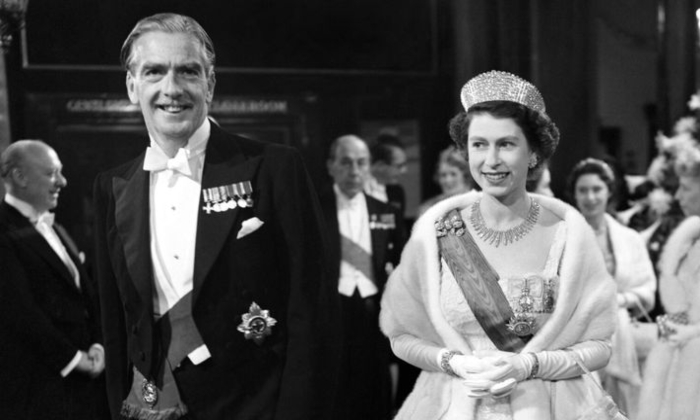
Queen Elizabeth’s relationship with her second prime minister, Anthony Eden, was dominated by discussions of Princess Margaret’s plans to marry Group Captain Peter Townsend as well as the Suez Crisis of 1956.
While the Queen’s sister ended up walking back her marital ambitions, Eden’s time in the office proved to be a short one due to his failure in handling the Suez Canal situation — one which also negatively overshadowed his initially pleasant relationship with the former monarch.
Harold Macmillan (1957-1963)
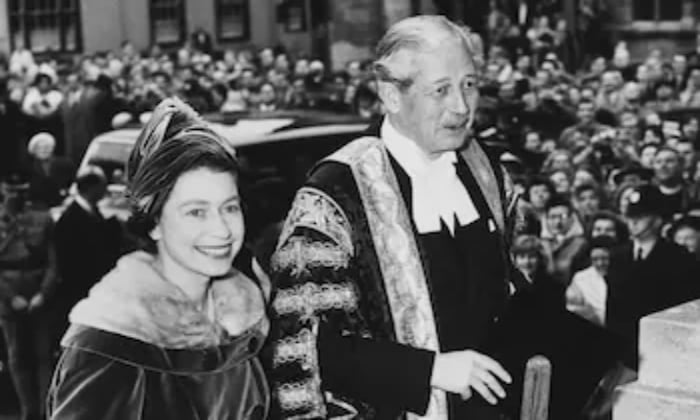
PM Macmillan’s relationship with the Queen was marked by a bit of skepticism on the parts of both parties at first, while a mutual admiration and understanding followed thereafter.
Notably, Queen Elizabeth considered Harold Macmillan to be a wise asset to her rule as well as the country, and even sought his counsel post retirement, for the construction of the English memorial to President John F. Kennedy.
Sir Alec Douglas-Home (1963-1964)
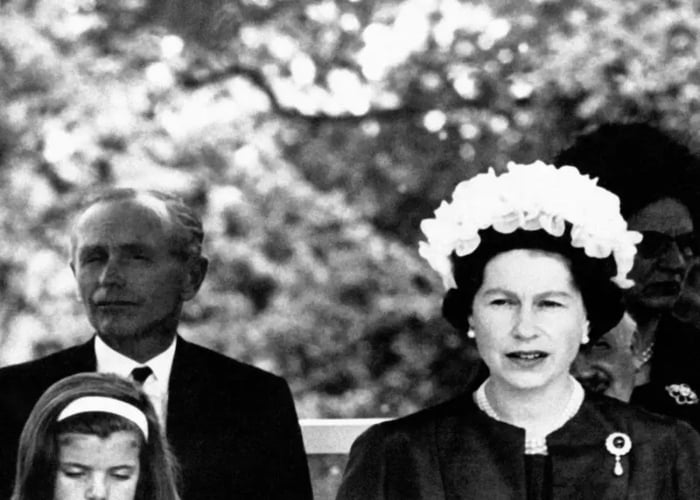
The fourth prime minister to her majesty, Alec Douglas-Home had been a friend of her mother’s, which made his appointment tricky for the Queen.
While Sir Alec was ousted by his opposition after only a year in the office, according to Tatler, “Before he was announced as the new PM, she distanced herself — both metaphorically and physically, by travelling to Windsor — to avoid any suggestion she had been involved.”
Harold Wilson (1964-1970 & 1974-1976)
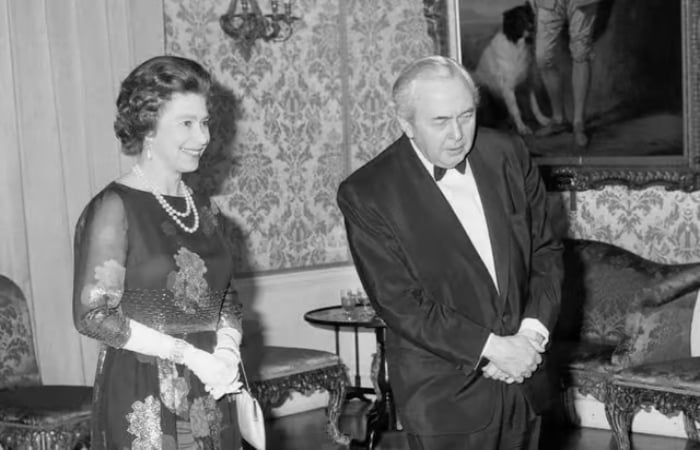
Leader of the opposition which got rid of PM Douglas-Home, Labour leader Harold Wilson proved to be one of the Queen’s most cherished ministers, despite his socialist political alignment.
Introducing a number of progressive reforms during his two terms at Downing Street, PM Wilson also became a regular at the royal family picnics and gatherings, with particular importance laid at his inclusion at their Balmoral stays — one of the Queen and her household’s most favourite residences.
Edward Heath (1970-1974)
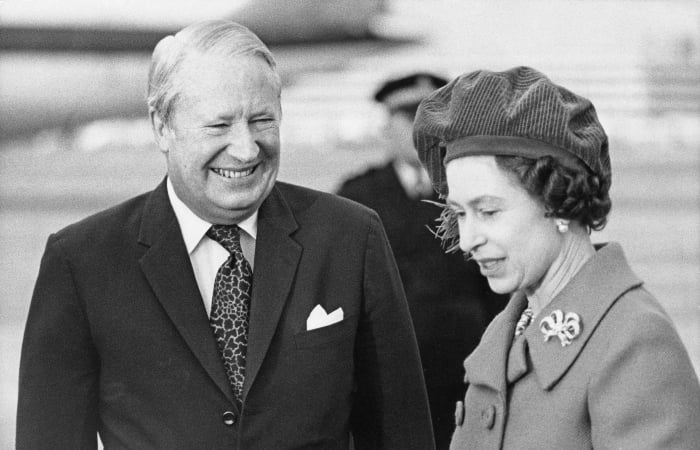
The Queen and PM Heath did not share the warmest of relationships, with the British leader remembered as the first of his rank to usher Britain into establishing a stronghold in Europe, which reportedly did much impress the Commonwealth sensibilities of Elizabeth II.
Marked by miner demonstrations and general unrest in the country, Edward Heath’s time in the office was rather unsuitable, while he also found his relationship with her majesty to be “frosty” and the Queen was “never comfortable with him” — per a former courtier, who was quoted by royal biographer and historian Ben Pimlott in his book, The Queen: A Biography of Elizabeth II.
James Callaghan (1976-1979)
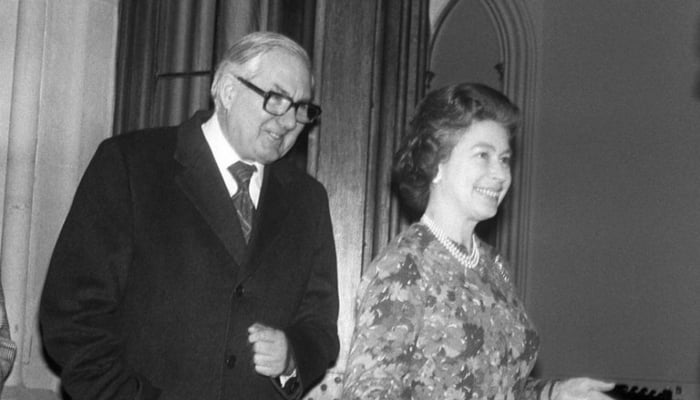
The Queen enjoyed an delightful rapport with PM Callaghan, another Labour party leader, described by Tatler as even “a flirtatious relationship”.
“One of the great things about her is that she always seems able to see the funny side of life. All the conversations were very enjoyable,” James Callaghan once said about Queen Elizabeth.
Margaret Thatcher (1979-1990)
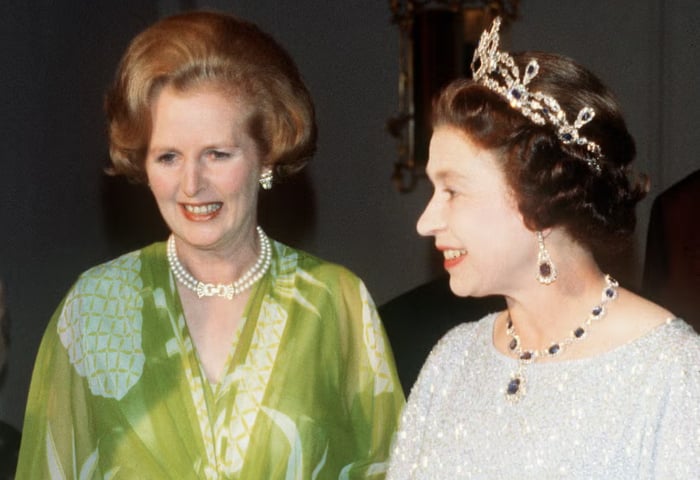
One of the most storied of all the relationships the Queen shared with her prime ministers, Margaret Thatcher simultaneously shared a mutually respectable and at times, a confronting, reputation with the Queen.
Her time in the office as Queen Elizabeth’s longest serving prime minister was distinguished by the Falklands War and other memorable instances — however, the two incessantly disagreed over the handling of the South African apartheid regime (favoured by Thatcher and opposed by the Queen), while the UK’s first woman prime minister was nevertheless admired by the late monarch, who granted PM Thatcher the Order of the Merit — one of the country’s highest honours.
John Major (1990-1997)
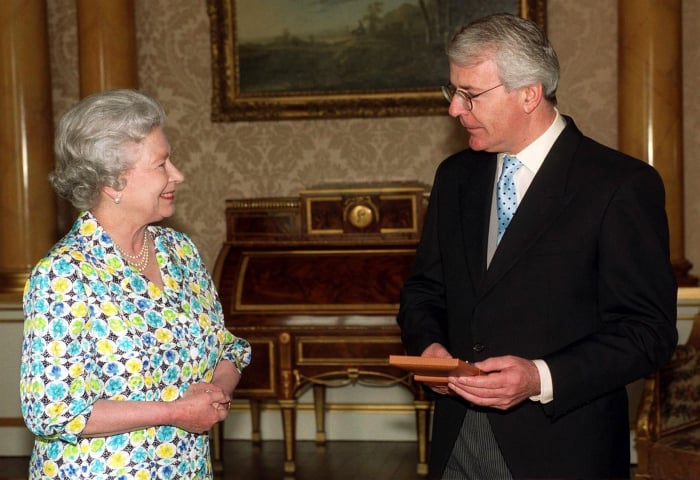
John Major was appointed PM during Queen Elizabeth’s “annus horribilis” — the horrible year which was marked by many personal tragedies for the royal household — and was also the first of her prime ministers to be her junior in age.
He oversaw and announced Charles and Diana’s official separation, was appointed William and Harry’s special guardian following the death of their mother, and later spoke of his relationship with the Queen as, “In many ways it’s cathartic.”
Tony Blair (1997-2007)
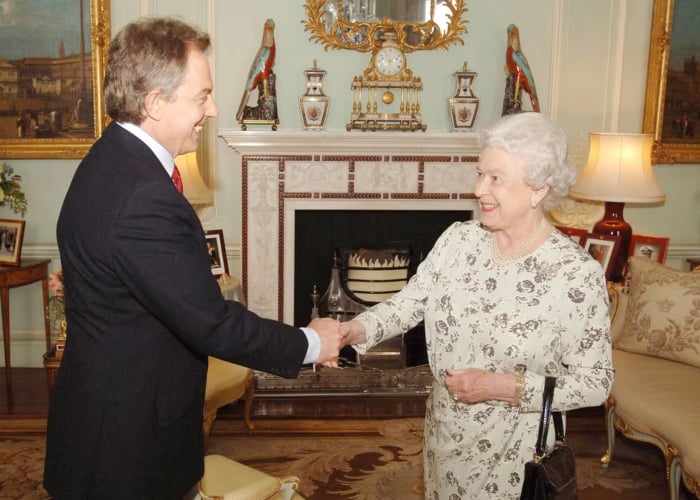
Queen Elizabeth shared a particularly volatile relationship with Tony Blair due to his efforts as a self described “moderniser”, who was also the first to dub Princess Diana as “the people’s princess” and credited himself with encouraging the Queen to issue a public statement after the demise of her former daughter-in-law.
Matters were made worse during his time as PM due to his wife, Cherie Blair’s refusal of the royal curtseying protocols, the couple’s open disdain for Balmoral gatherings, as well as a host of other policies.
Gordon Brown (2007-2010)
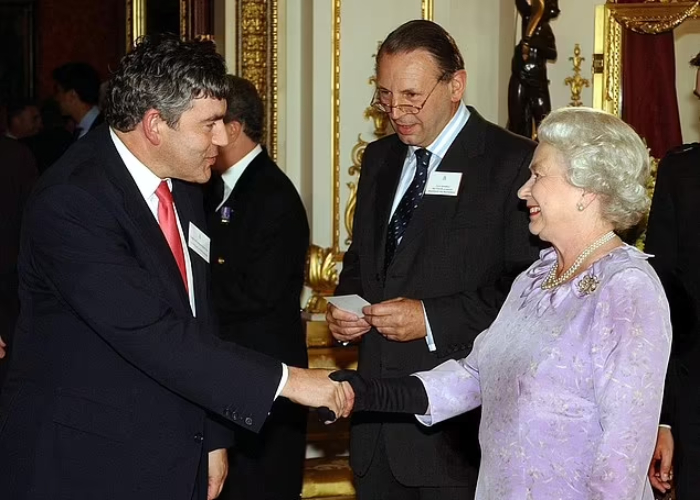
A relationship that was not much improved than the one the Queen shared with PM Blair, Gordon Brown’s time as her prime minister was also marked by her indifference for their dynamic and he remains the only former leader, along with Blair, not to receive an invitation for Prince William and Kate Middleton’s wedding in 2011.
Recalling one of their weekly audiences, PM Brown stated, “I was very embarrassed one day because I went in to see her at six o’clock. I didn’t know that one of the Commonwealth leaders had been ousted and a new government had been formed. She was telling me what was happening when I was supposed to report to her.”
David Cameron (2010-2016)
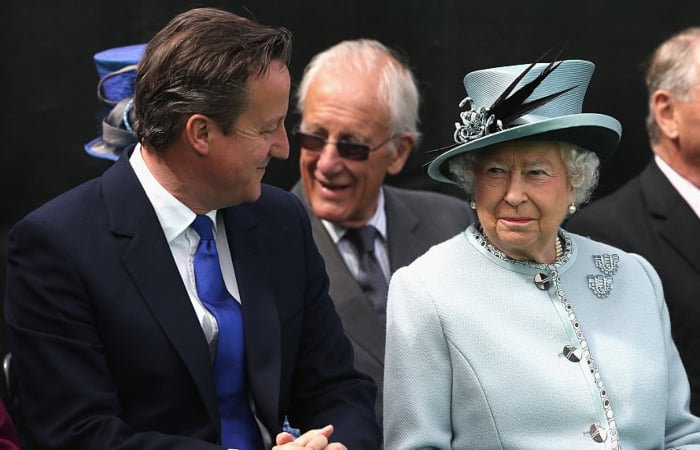
While David Cameron enjoyed a fruitful relationship with his Queen — also being her distant relative — he memorably ran into trouble when he unknowingly disclosed his private conversation with the monarch while talking to New York Mayor Mike Bloomberg, unaware that he was still wearing a mic.
He said that the Queen had “purred down the line” when she was informed about the results of the Scotland independence memorandum over telephone by him (Scotland had voted in favour to remain part of the UK), and went on to apologise for the huge oversight, stating, “I am extremely sorry and very embarrassed about it. I have made my apologies and I think I will probably be making some more. I am very sorry about it.”
Theresa May (2016-2019)
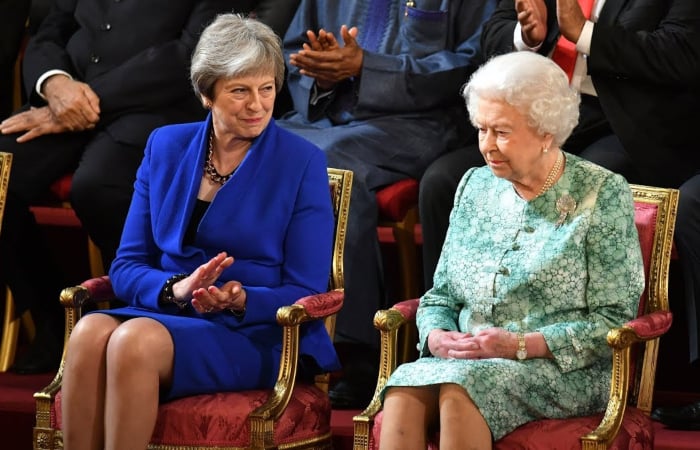
Queen Elizabeth’s second female prime minister, Theresa May was treated to a warmly cordial relationship with her.
ITV’s Royal Editor Chris Ship described the royal household’s sentiments on PM May’s departure from the office as, “While members of the Royal Family sit above the political debate, I’ve heard some of them speak with admiration for the level of hard work and many hours of negotiation Theresa May has invested in her role over the last three years.”
Boris Johnson (2019-2022)
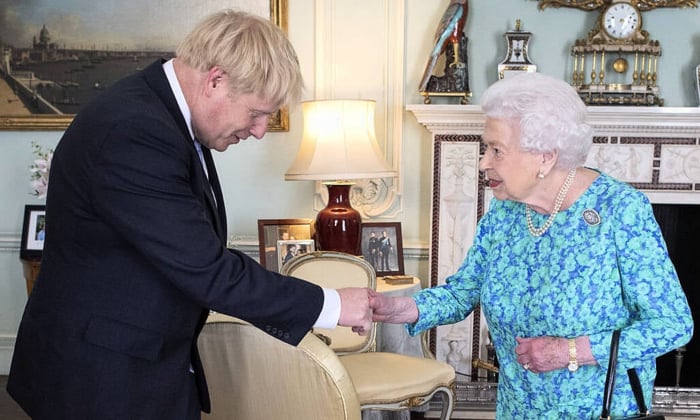
While Boris Johnson held great admiration for the Queen, he was forced to issue apologies to her on multiple occasions while he was prime minister — including the time he attended parties during the Covid pandemic’s peak as well as on the eve of Prince Philip’s funeral, husband to Queen Elizabeth.
He memorably executed “Brexit” — Britain’s withdrawal from the European Union — and after failing to convince her majesty to dissolve the parliament in his favour, Boris Johnson was forced to resign after his cabinet quit the government en masse in July 2022.
Liz Truss (2022)
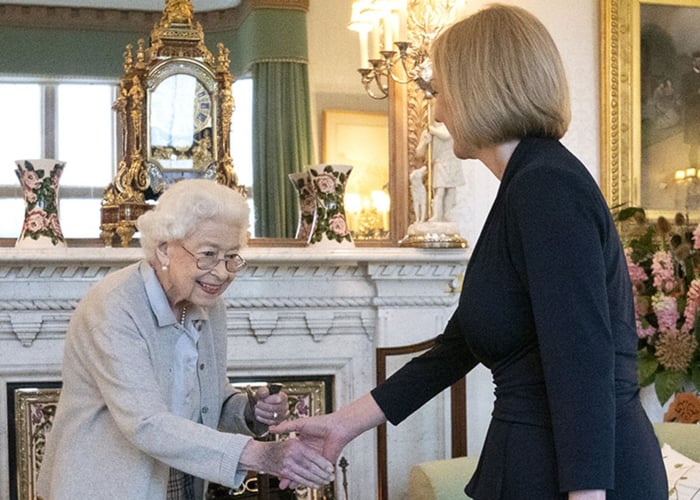
Having the distinction of being the shortest serving prime minister of Britain, Liz Truss was also the last one to be appointed by Queen Elizabeth and went on to remain in office from September 6 to October 25, in 2022.
Due to the monarch’s ailing health at the time, PM Truss travelled to Scotland — where the monarch had retired for recuperation at her private retreat — while Queen Elizabeth passed away just two days after the appointment of her last prime minister.