From scripts to screens: How AI took over Hollywood in 2025
Looking back at Hollywood’s unprecedented acceptance of artificial intelligence
This year proved to be a watershed moment for AI — the technology exploded onto the scene by conquering various domains, most prominent among all of them, Hollywood.
Hollywood’s unprecedented acceptance of artificial intelligence was in stark contrast to last year’s comparatively skeptic and otherwise hush-hush approach, while the technology’s use catapulted bigger concerns and contentment alike in various corners of the industry.
From widespread panic to equally extensive efforts towards embracing it, the technology basically named Person of the Year by TIME (‘Architects of AI’) was comfortably Hollywood’s defining feature in 2025.

Hollywood found the antidote for stars who prefer to maintain their privacy, by refusing to pose for selfies or hand out autographs, through the introduction of AI “actor” Tilly Norwood (because the actual reason for its creation and purpose remains an enigma).
Tilly Norwood was presented as “the next Scarlett Johansson or Natalie Portman” by its creator Eline Van der Velden in an interview with Broadcast International back in July, shortly before its launch by the AI production studio Particle6 at the Zurich Summit in September.
Except, it is more likely for Tilly Norwood to resemble the current generation of actresses than embody their talent, considering that AI models are deliberately designed from pre-existing content — which, in an AI actress’ case, would be real people.
Scarlett Johansson herself isn’t too thrilled about her potential peer, warning against “the threat of AI,” a technology which she said “affects each and every one of us.”
While stars like Emily Blunt directly called out Tilly Norwood’s creation, labelling the movement “really, really scary”.
_updates.gif)
Disney sued AI company Midjourney in June, only to welcome it not too long after.
The company’s lawsuit was accompanied by the statement, “Piracy is piracy,” but clearly, something changed along the way when it closed a deal with the generative technology’s biggest juggernaut — OpenAI.
Disney invested a billion dollars into the organisation “and said it would allow customers to use AI tools to generate versions of its own characters,” per The Hollywood Reporter.
The move was perhaps the most significant indicator of a generational shift transpiring within the foundations of Hollywood, or what’s left of them — major corporations evidently plan to proceed with more control and less caution when it comes to AI.
_updates.gif)
The rapidly developing tech found itself at the end of more high profile adversaries’ sharpened spears when several celebrities fell prey to AI-generated deepfake content online based on their likenesses.
Reaching to such heights as to beckon the necessity of government interference, the deepfake controversy was tackled by American lawmakers who introduced the NO FAKES Act of 2025 in Congress.
However, CNN reported that “critics of the bill”, which include free speech advocate organisations like the Center for Democracy and Technology and American Library Association, raised concerns about the bill’s text introducing “too much regulation.”
“In a letter to the senators last year, they warned it could endanger First Amendment rights and enable misinformation, while resulting in a ‘torrent’ of lawsuits,” the report added.
_updates.gif)
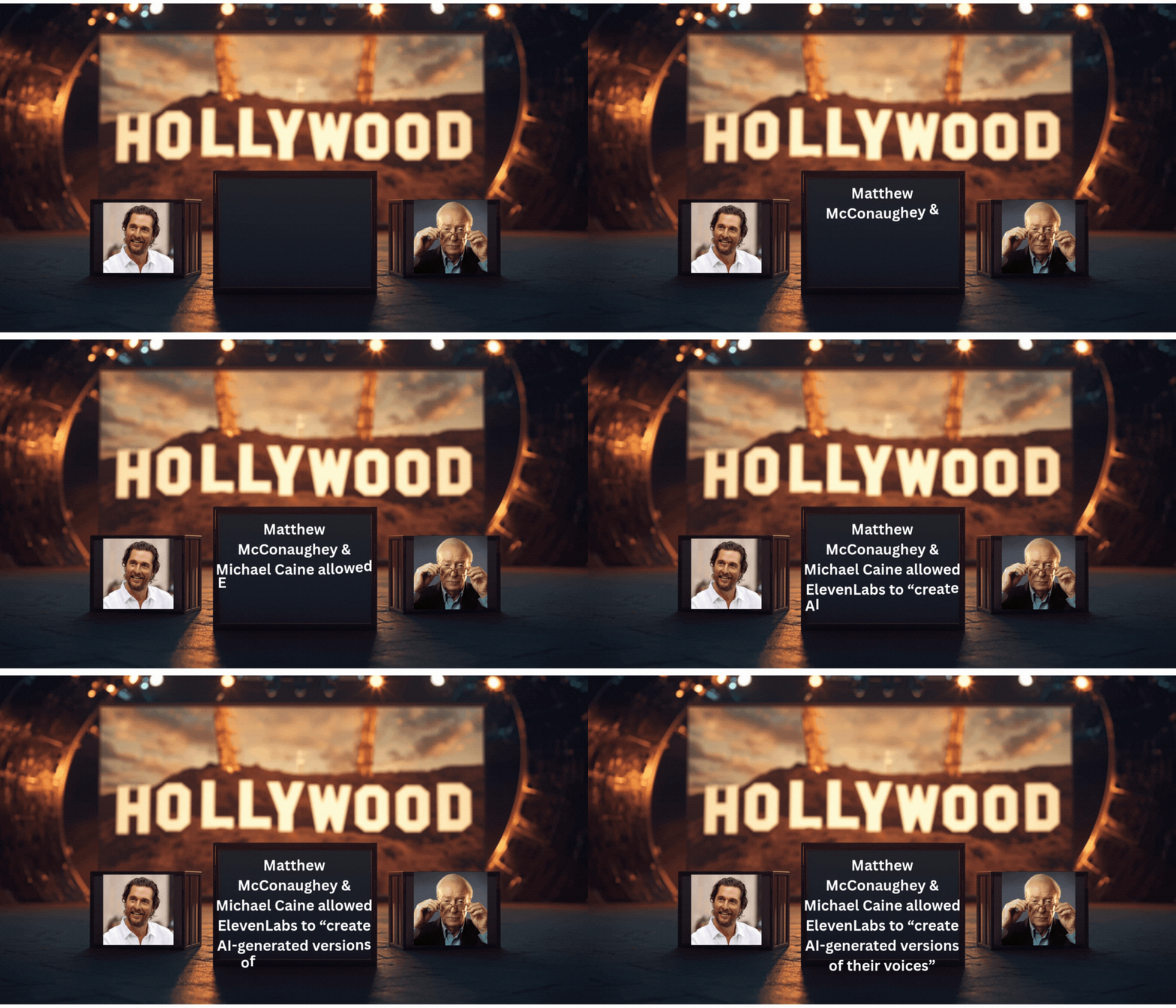
Not all are worried about AI running amuck with their likenesses — celebrities like Matthew McConaughey and Michael Caine closed a deal with AI audio company ElevenLabs, allowing the firm to “create AI-generated versions of their voices as part of a bid to solve a ‘key ethical challenge’ in the artificial intelligence industry’s alliance with Hollywood,” per The Guardian.
Michael Caine issued a statement regarding the agreement: “For years, I’ve lent my voice to stories that moved people – tales of courage, of wit, of the human spirit. Now, I’m helping others find theirs. With ElevenLabs, we can preserve and share voices – not just mine, but anyone’s.”
Not merely satisfied with the living, the company also brought in deceased Hollywood talents into its fold, set to replicate the voices of personalities like John Wayne, Rock Hudson, and Judy Garland.
_updates.gif)
Mad Max director George Miller put his weight behind the inaugural Omni 1.0 AI film festival, held in November.
The Australia-based competition was created to judge entirely AI-generated films, while the filmmaker native to the same country joined its jury.
“AI is arguably the most dynamically evolving tool in making moving images,” he told The Guardian. “As a filmmaker, I’ve always been driven by the tools. AI is here to stay and change things.”