


Home / Technology
Nuclear deflection could be ultimate shield against an apocalypse
Research shows asteroids grow stronger under impact rather than shattering into fragments
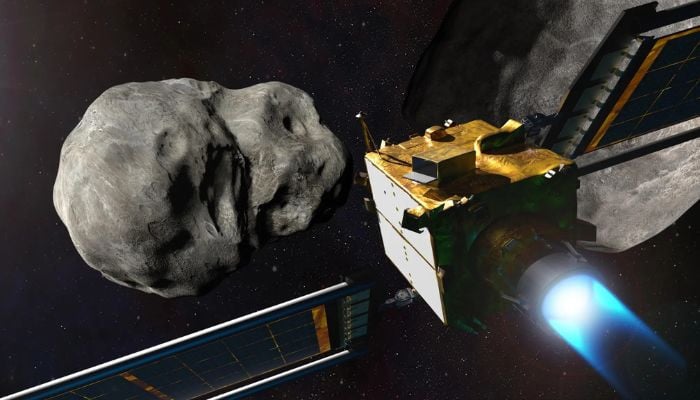
A study published in Nature Communications reveals that space rocks are far more resilient than previously thought. Surprisingly, asteroids actually become stronger when hit with intense force.
While this sounds daunting, it is positive news for planetary defence; it suggests a nuked asteroid would likely stay in one piece rather than shattering into a deadly "buckshot" of smaller rocks raining down on our planet.
Physicists from the University of Oxford and the startup Outer Solar System Company (OuSoCo) used a particle accelerator at CERN to blast a meteorite sample with high-energy proton beams.
They observed the material deforming and then re-strengthening in real-time. Co-leader Melanie Bochmann noted that the material’s strength increased by a factor of 2.5, explaining, “The world must be able to execute a nuclear deflection mission with high confidence, yet cannot conduct a real-world test in advance.”
Unlike the films, a real mission would not involve drilling. Instead, experts suggest a "standoff detonation" near the rock.
The explosion would vaporise part of the asteroid's surface, creating a jet of material that acts like a rocket engine to push the rock onto a safe path.
This data provides the "extraordinary demands on material and physics data" needed to ensure that if we ever have to pull the nuclear trigger, we won't miss.