


Home / Technology
Tesla claims cars to drive autonomously; Waymo sets higher standards
Tesla and Waymo adopt distinct engineering philosophies for their autonomous driving technology
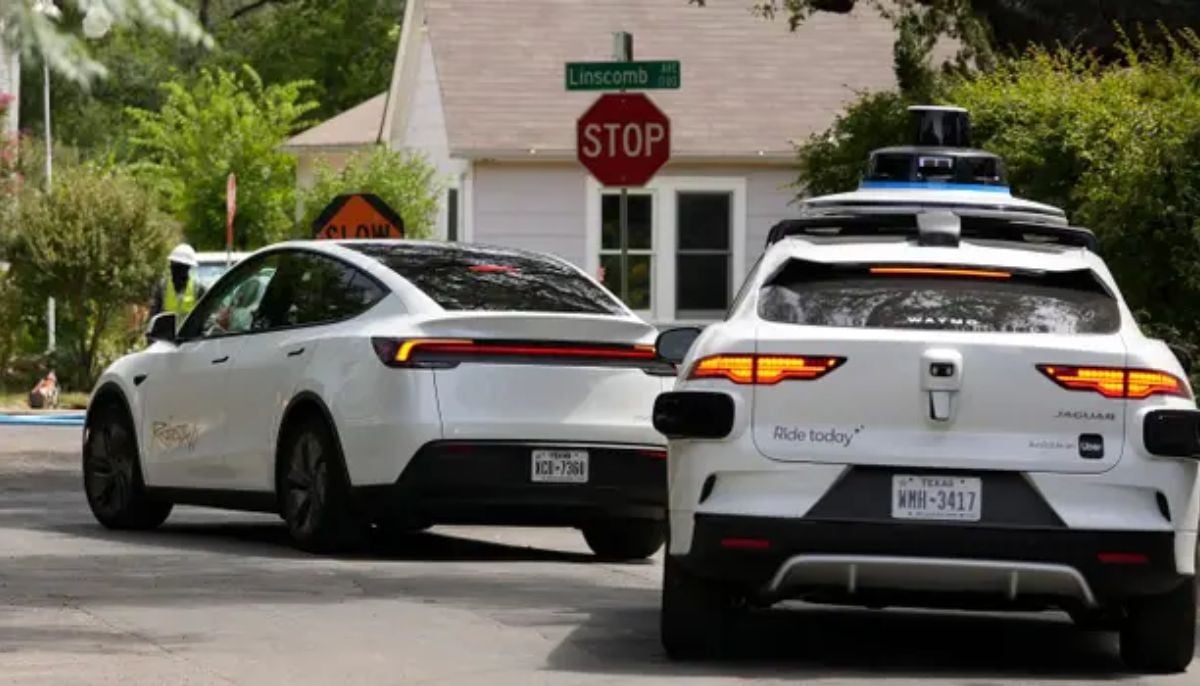
Could an AI rely on cameras alone for safe driving like humans use their eyes?
Tesla supports this idea to justify its controversial cameras-only strategy for self-driving cars.
"The issue should be solved with cameras, as that's how all humans and animals operate globally," Ashok Elluswamy, Tesla's vice president of AI, stated at the ScaledML Conference on January 29.
"This self-driving challenge is considered a sensor issue. It’s actually an AI issue."
Alphabet's Waymo takes a completely different engineering route towards autonomy. Srikanth Thirumalai, Waymo's vice president of onboard software, countered Elluswamy's analogy.
"I believe the expectation is above that of human driving," he informed Business Insider.
The divergence between Waymo and Tesla extends beyond ideology and is embedded in their hardware choices.
Tesla aims for full autonomy using fewer than 10 cameras and AI trained on billions of driving miles from real-world data.
Waymo aligns its AI with a multi-sensor setup — comprising 29 cameras, five lidars, and six radars — to provide the AI driver various ways to sense surroundings.
The Alphabet subsidiary has deployed nearly 2,500 robotaxis across numerous US cities.
The conversation often centers on the balance between cost and safety: Increasing sensors may raise expenses, which could hinder scalability.
Alternatively, fewer sensors could pose safety concerns, marking another hurdle for broad adoption of robotaxis.