


Home / Technology
NYU physicists make time crystal using Styrofoam and sound
NYU physicists created a classical time crystal using just styrofoam beads and sound waves
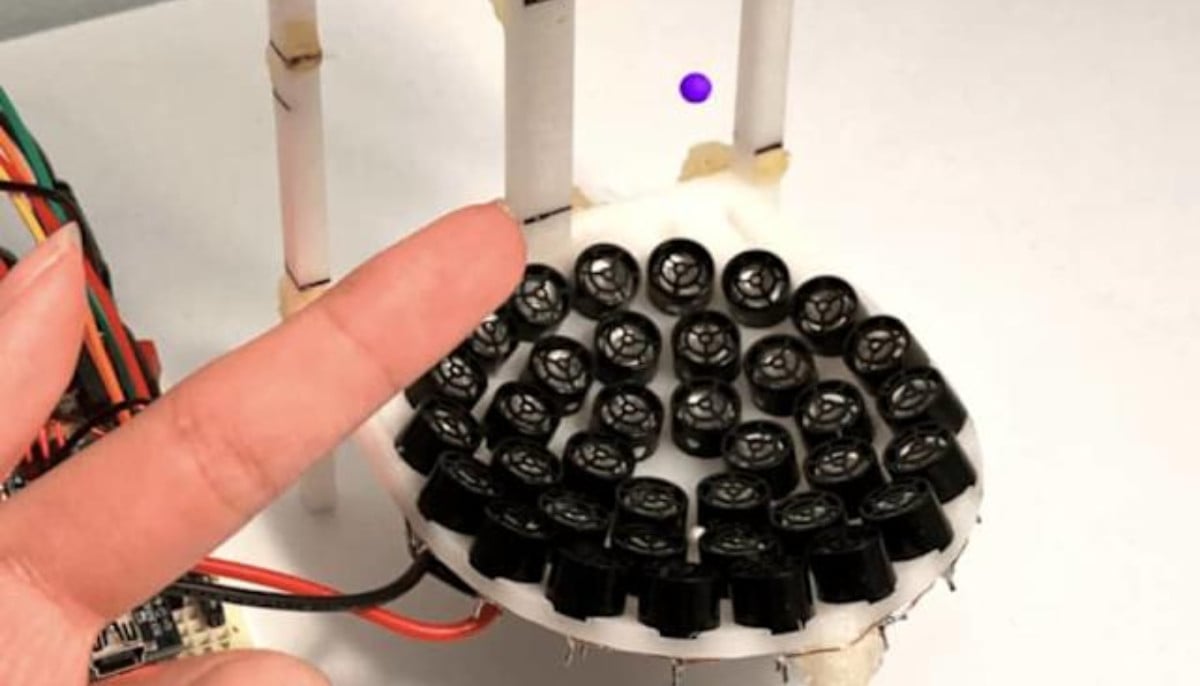
Exotic states of matter known as time crystals are usually thought of as a quantum phenomenon, but researchers at New York University (NYU) have shown they can emerge in a much simpler, classical form. Using just tiny styrofoam beads and a setup of speakers, the team created a system where the beads oscillate in a stable, repeating temporal pattern.
Unlike normal crystals, whose atoms repeat in space, time crystals repeat in time, oscillating without the need for an external clock. In this experiment, two millimeter-sized beads were levitated in a standing sound wave, causing them to interact indirectly through scattered sound. Larger beads exerted stronger forces on smaller ones, producing non-reciprocal interactions that led to the emergence of a repeating temporal pattern.
“Our system is remarkable because it’s incredibly simple,” said NYU physicist David Grier. The beads’ oscillations were stable for hours, forming a minimal classical time crystal that could serve as a laboratory for studying exotic behaviors in a macroscopic setting.
While practical applications are not yet clear, the findings could inspire new studies into systems with non-reciprocal interactions, including biological processes. The work also demonstrates that some of the most unusual phenomena in physics don’t always require expensive quantum equipment—sometimes, styrofoam and sound are enough.