


Home / Entertainment
Emerald Fennell responds to critics over controversial changes in ‘Wuthering Heights’
Despite backlash, the film debuted at the top of the global box office
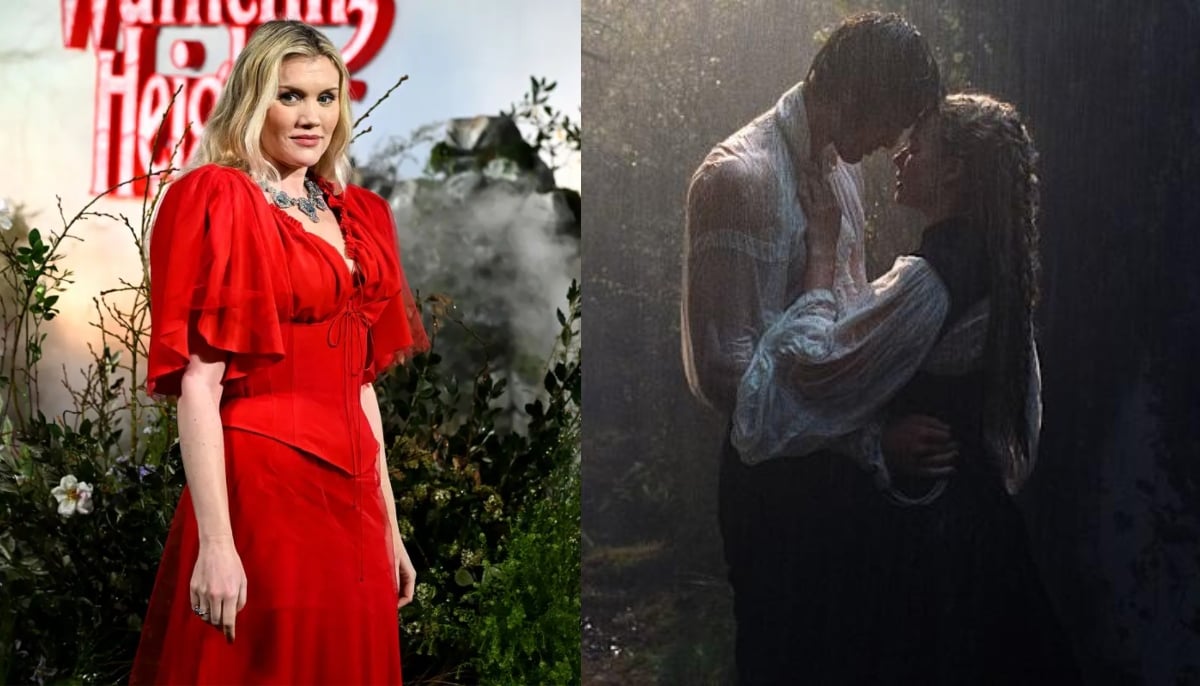
Emerald Fennell has defended her bold reinterpretation of Wuthering Heights, insisting her new film is “a version” of the classic rather than a strict adaptation, as the movie opened at No. 1 at the global box office over Valentine’s Day weekend.
Speaking in recent interviews, the Oscar-winning writer-director said the 1847 novel by Emily Brontë has long been deeply personal to her, but acknowledged that translating its dense, layered structure to screen required sweeping changes.
“The book means so much to me,” Fennell said, explaining that she could not claim to be making a definitive Wuthering Heights. “What I can say is I’m making a version of it. So it is Wuthering Heights, but it isn’t.”
The filmmaker, who won an Academy Award for Promising Young Woman, described her approach as inspired by the way she remembered reading the novel as a teenager, a more impressionistic and emotionally heightened memory of the story rather than a literal rendering of the text.
The film stars Margot Robbie as Catherine Earnshaw and Jacob Elordi as Heathcliff in what has been billed as a tragic and explicitly sensual retelling of the doomed romance.
From its casting announcement, the project drew scrutiny from literary purists. Some critics questioned Robbie’s age relative to her character, who is a teenager in the novel, while others reignited long-standing debates over Heathcliff’s racial identity, described in the book as “dark-skinned.”
Fennell has said she cast Elordi after working with him on Saltburn, noting that he resembled an early illustrated depiction of Heathcliff from the edition she first read.
She also praised Robbie, who serves as a producer on the film, as possessing the magnetic unpredictability she associates with Cathy.
The adaptation further departs from Brontë’s original by omitting major characters, including Mr. Lockwood and Hindley Earnshaw, and by focusing only on the first half of the novel’s narrative.
Fennell has acknowledged that a full and faithful rendering would likely require a long-form television series rather than a feature film.
One of the most controversial changes involves Isabella Linton, portrayed by Alison Oliver.
In the novel, Isabella’s marriage to Heathcliff is marked by cruelty and abuse. In Fennell’s version, the relationship is reframed to include elements of agency and consent, including a provocative scene that has sparked debate among audiences.
Fennell has argued that while she introduced visual flourishes, the emotional and thematic core of Isabella’s storyline remains rooted in Brontë’s text, describing the original material as already “very transgressive” for its time.
Despite divided reactions online, the film has found support in some literary circles. Staff members at the Brontë Parsonage Museum in England, who previewed the movie, described it as an entertaining and dreamlike riff that captures essential truths about Heathcliff and Cathy’s volatile bond, even if it is not a purist’s adaptation.