


Home / Technology
Expansive radio sky map uncovers 13.7 million hidden objects
Astronomers have unveiled data from a record-breaking sky survey at radio wavelengths
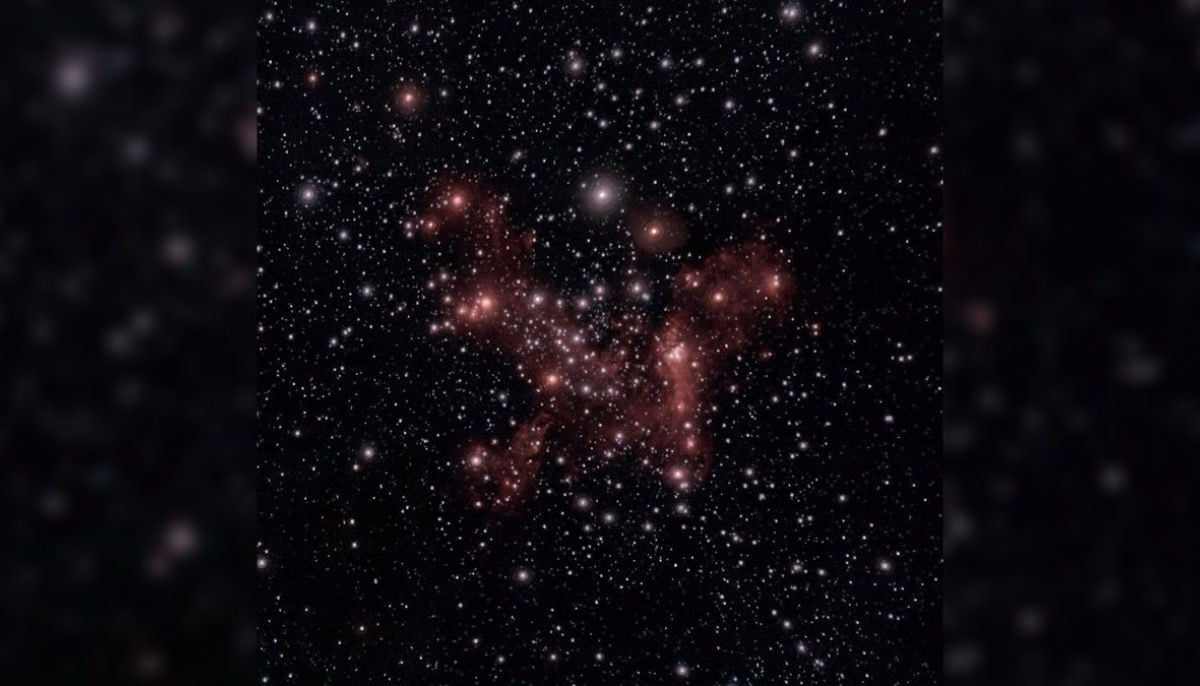
Our perception of the universe changes dramatically depending on our method of observation.
Currently, astronomers have unveiled data from a record-breaking sky survey at radio wavelengths, uncovering nearly 13.7 million cosmic entities in a spectrum invisible to the human eye cannot see unaided.
This marks the third data release from the LOFAR Two-metre Sky Survey (LoTSS-DR3). It offers a groundbreaking compilation of cosmic bodies emitting radio signals.
These encompass some of the universe's most extreme occurrences, including galaxies being morphed into bizarre configurations by Death-Star-like emissions from colossal black holes.
The study spans 88% of the northern sky and includes approximately 13,000 hours of data gathered over several years.
"This data release assembles over ten years of observation, extensive data processing, and scientific interpretation by a global research team," says Timothy Shimwell, the lead researcher and an astronomer affiliated with ASTRON and Leiden University in the Netherlands.
As outlined in a recent publication in the journal Astronomy & Astrophysics, a coalition of international scientists performed this survey utilizing the LOw Frequency ARray (LOFAR).
LOFAR itself is a marvel of technology. It doesn't resemble the large dish arrangements ideal for climactic final battles between super-spies.
Rather, the telescope array is an interferometer made up of approximately 20,000 antennas distributed across 52 separate stations – 38 in the Netherlands and 14 in other European nations.
Spanning more than 1,000 kilometers (600 miles), they can operate individually or unite as a singular radio telescope the size of Europe.
The scientists utilised one of Europe's leading supercomputers, based at the Jülich Supercomputing Centre (JSC) in Germany, to interpret the amassed data.
The specific nature of the data might also be unexpected, as LOFAR doesn't merely 'capture images' of the night sky.
To build a single image, scientists must combine the input from 70,000 antennas, a process that requires digitising, transmitting, and combining 13 terabits (equivalent to more than 300 DVDs) of raw data each second.