Nvidia CEO Jensen Huang declares OpenClaw as 'next ChatGPT'
Jensen Huang highlights OpenClaw as a significant breakthrough in AI-human interaction
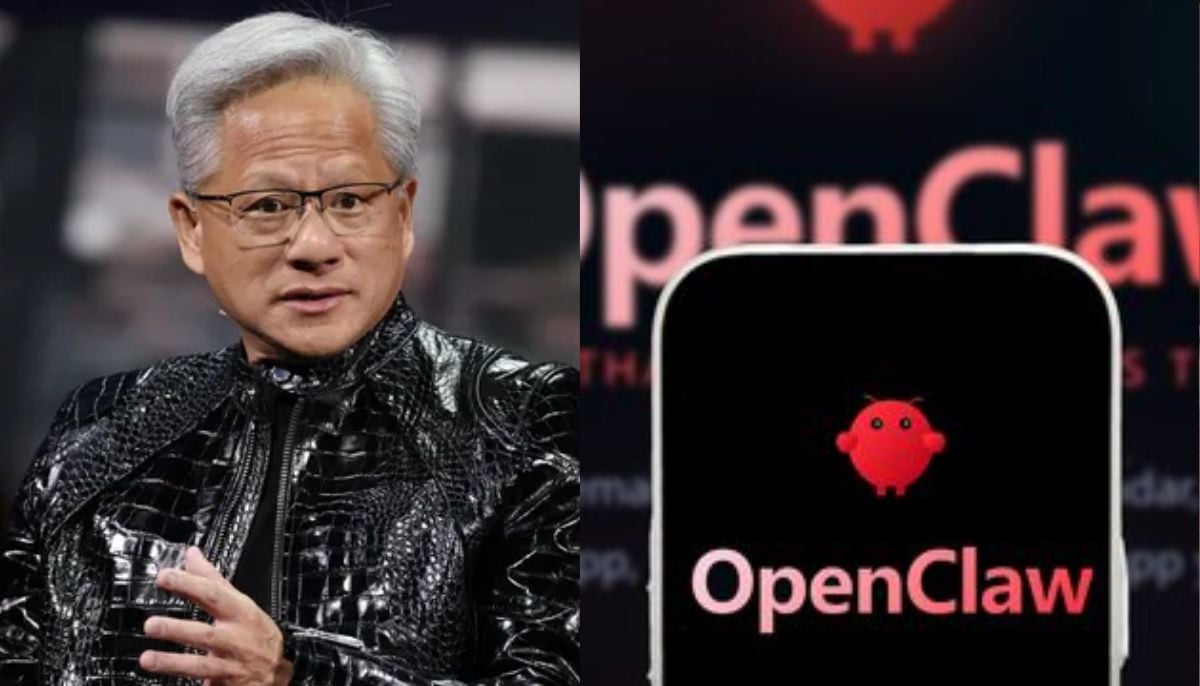
Nvidia CEO Jensen Huang highlighted an emerging AI initiative named OpenClaw on Tuesday, emphasising its significance in reshaping interactions with artificial intelligence.
"It's become the world's largest, most renowned, widely adopted open-source endeavor in human history," Jensen explained to Jim Cramer during a "Mad Money" segment at Nvidia's GTC gathering in California.
"This is poised to be the next ChatGPT," the CEO stated.
OpenClaw is an open-source self-sufficient AI agent framework that surpasses usual chatbots. Instead of merely responding to questions, these agents are capable of completing tasks, making choices, and initiating actions with minimal user input.
Nvidia swiftly responded to OpenClaw's success. On Monday, the AI chip frontrunner introduced NemoClaw, a business-quality variant of OpenClaw that integrates Nvidia's software and tools onto the platform.
The objective is to render these robust AI agents secure, scalable, and suitable for practical application.
Jensen portrayed the innovation as a transformative advancement that could greatly enhance individual capabilities with AI.
"With a single line of code, you can develop your own agent. Following that, simply instruct the agent to perform any task you desire," he explained.
The CEO demonstrated this with a practical scenario: crafting a kitchen design. With a brief instruction, an OpenClaw agent could analyse images, grasp design tools, iterate on concepts, and enhance its own results autonomously.
"They'll embark on learning kitchen design. It will return with a plan and reflect on it," Jensen noted, illustrating how the system can improve its work.
The greater impact, he indicated, is the enhancement of personal expertise. "Each carpenter can now assume the role of an architect. Every plumber can evolve into an architect. We're set to elevate everyone's abilities," he mentioned.
Undoubtedly, the quick expansion of autonomous AI agents like OpenClaw has also spawned concerns regarding security, privacy, and control—especially as these systems become adept at independent functionality.