Home / Technology
GM utilises AI to visualise and accelerate car development
GM leverages AI to create a video featuring its concept car cruising on a highway
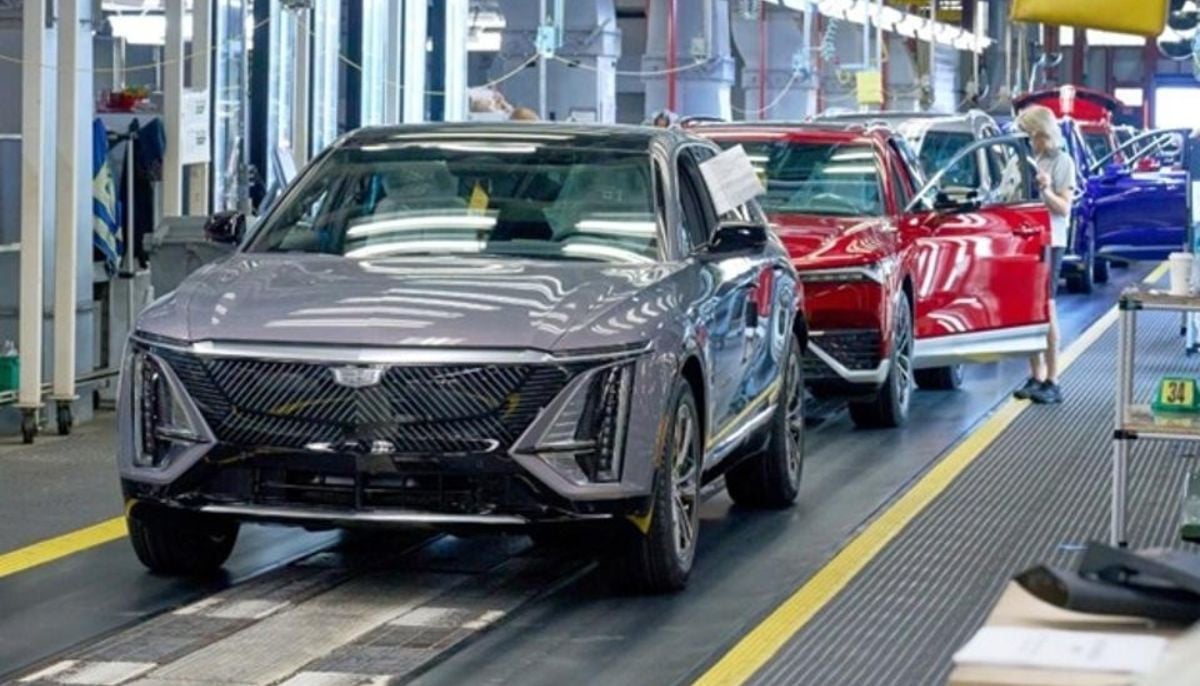
General Motors is integrating artificial intelligence (AI) into a traditionally human-centric aspect of the car industry: design.
For a long time, car manufacturers have channeled AI towards improving manufacturing efficiency, enhancing product reliability, and optimising supply chain assessments.
Now, GM states its generative AI tools are embedded throughout their creative workflow.
These systems can convert initial sketches into conceptual videos, recommend design improvements, and perform preliminary aerodynamic assessments. According to executives, this significantly shortens the design process.
This is increasingly crucial in an industry that typically requires five to seven years to bring a new vehicle to market and has been challenged by supply chain disruptions, tariff impacts, rising Chinese EV competitors, and evolving federal incentive policies.
GM emphasises that while they deploy swift AI tools, they continue to prioritize designers in the process.
"Human ingenuity sets the direction," Dan Shapiro, a creative designer at General Motors, explained to Business Insider. "AI helps us realise that vision faster."
The design process at GM still begins with a designer and a sketchpad. AI accelerates turning that vision into reality, GM noted.
Through collaboration with AI startup Discom, GM has created a software that converts hand-drawn sketches from different perspectives into a comprehensive 360-degree model of the vehicle.
The technology can generate multiple visual variations, simulate camera movements, and produce animations showing how a vehicle might appear in motion.
GM is leveraging AI to enhance one of the most demanding aspects of vehicle creation: aerodynamic testing.
Engineers often use computational fluid dynamics simulations to mimic airflow around a vehicle, though these are accurate, they are time-consuming, taking weeks for iterations between design and engineering teams.
GM reports developing an AI-enhanced "virtual wind tunnel" capable of estimating aerodynamic drag with near immediacy.
"Previously, the design and engineering cycle would take us about two weeks," Rene Strauss, GM's director of virtual integration engineering, noted.
"Now, it's almost instantaneous. Designers and aerodynamic specialists can adjust parameters live on the same display."
For instance, GM can digitally alter a windshield's orientation and obtain revised drag evaluations in just over a minute.