Anthropic model suspension exposes AI access risk and drives interest in open-source rivals
Microsoft CEO companies risk ceding value to a few models that dominate all
Anthropic's abrupt suspension of its Fable 5 and Mythos 5 models late last week to comply with a United States government export control directive has sent a stark warning through the technology industry: access to AI can be switched off at any time, without notice.
A wake-up call for the AI industry
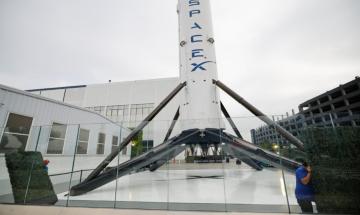
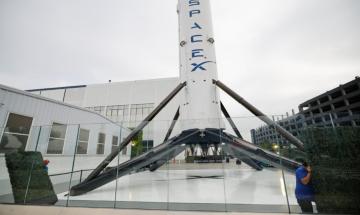
Anthropic announced it had disabled both models for all customers to ensure compliance with a directive citing "national security authorities," while confirming its remaining models would not be affected. The suspension landed at an awkward moment on the Friday evening — roughly two hours after SpaceX concluded its first day of trading following what had been the biggest IPO on record.
The episode has emerged as a dominant theme for Wall Street this week, arriving just as Anthropic and OpenAI are preparing for what could be massive IPOs in the months ahead.
Nadella warns against AI dependence
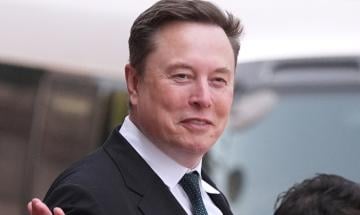
Microsoft Chief Executive Officer Satya Nadella — whose company is the principal investor in OpenAI and also backed Anthropic with billions of dollars last year — used the moment to issue a public caution.
In a post on X on Monday, Nadella urged companies to "build agentic systems that improve over time, while still retaining control over their IP." He added: "The last thing any of us want is a world where every company across every sector is ceding value to a few models that eat everything they see."
Open-source and Chinese AI firms surge
Investors reacted swiftly to the Anthropic news by pivoting towards open-source alternatives. Chinese AI firms MiniMax and Zhipu both surged on Monday, as markets took notice of downloadable models that companies can run on their own infrastructure — and which no government directive can switch off remotely.
Models from DeepSeek, Tencent, Xiaomi, and MiniMax all ranked among OpenRouter's most-used this month, holding their own against closed competitors. Zhipu framed its latest release as a direct rebuttal to Washington, arguing that cutting-edge AI should not belong to a handful of players or be withdrawn at will.
The case for owning your own model
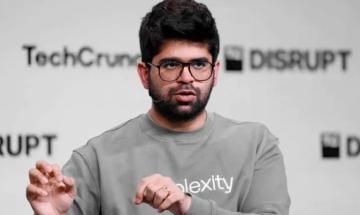
Yash Patel, Chief Executive Officer of Applied Compute, a company that helps businesses train and run custom models, said the Anthropic episode "highlighted the significance of owning your own model."
He noted the shift towards model independence has accelerated sharply in recent weeks. "What we've been hearing increasingly, probably more so in the last month than the entire year, is the fact that they want a multimodal future," Patel said. "They don't want to be locked into a single vendor."
Cost pressures accelerating the shift
Beyond geopolitical risk, rising costs are also pushing enterprises to reconsider their AI strategies. As the price of state-of-the-art AI climbs, companies are already routing routine work to cheaper models and reserving the most expensive tools for their most demanding tasks. Patel described this dynamic as a "token-pocalypse" as AI products move towards usage-based pricing.
"The era of token maxing is over," he said, with companies now seeking "better, cheaper, faster models." That pressure is even leading some businesses to reconsider Chinese open-source models they would have dismissed out of hand just months ago. "Before it was just kind of like I don't even want to talk about it," Patel said. "Now they're like, OK, how good could it be, and if it's good, we'll figure it out."
What this means for the AI race
The developments serve as a reminder that the AI market remains in its early stages, with ChatGPT's public launch occurring less than four years ago. That context reframes the question of who is actually winning the AI race. The ultimate winners, the week's events suggest, may not simply be the large closed-model laboratories — regardless of what their current valuations imply.
The broader question now emerging is whether the open-source models winning the most adoption being predominantly Chinese poses a strategic challenge for the United States, just as the world's two largest economies are locked in a contest over controlling the future of artificial intelligence.