San Diego mosque attack was livestreamed on Signal and watched by at least three people
Gunmen filmed themselves killing three people at the Islamic Centre of San Diego
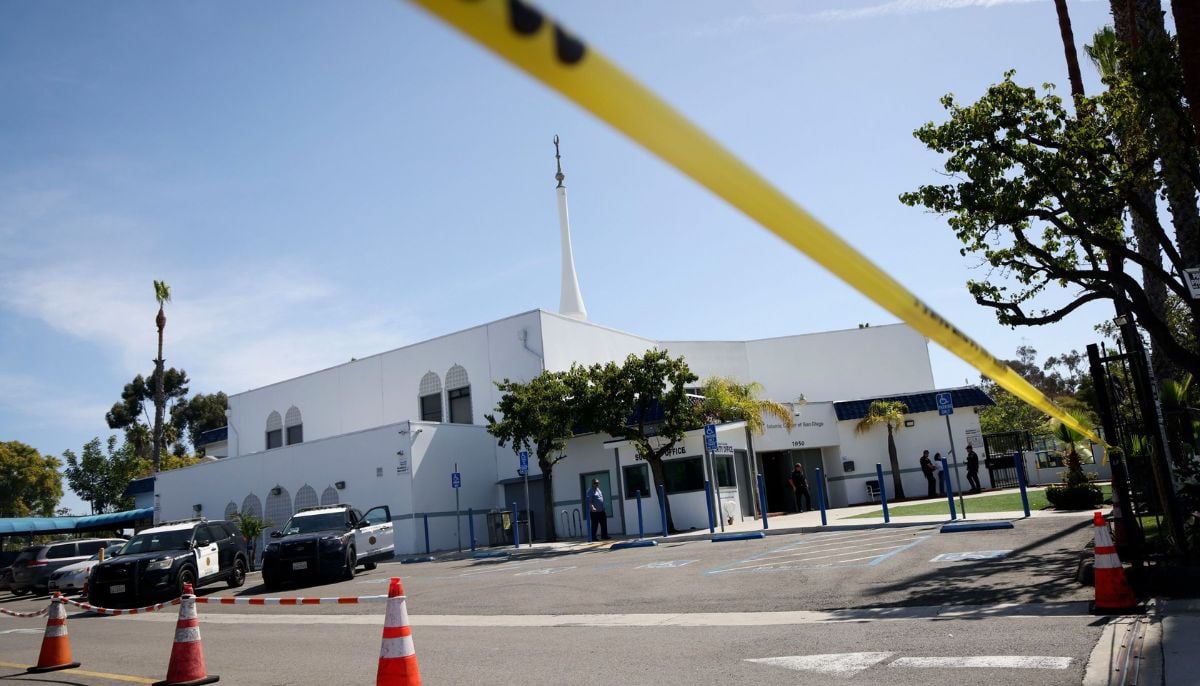
At least three people watched a livestream as the gunmen behind Monday's attack at the Islamic Centre of San Diego filmed themselves killing three people, before dying themselves — according to a CBS News analysis of footage from the attack. One viewer urged another to contact law enforcement, though it remains unclear whether anyone did so.
A recording of the attack subsequently circulated online, including on so-called "gore websites" that have previously served as gathering places for admirers of mass shooters.
How the livestream unfolded
According to screen recordings reviewed by CBS News, the shooters were on a Signal video call with a user identified only as "Noelle" before and during the attack.
The recordings indicate Noelle had been on the call with the gunmen for approximately 20 minutes before the shooting began.
During that time, Noelle appears to have used a second phone to join a Discord video call with another user, identified as "Otto," positioning the camera so that Otto could watch the Signal call in real time. Otto then began recording the footage on his own device.
As the attack unfolded, Otto alerted another person on Discord to the live video. "DUDE LOOK," Otto wrote. The person asked where the gunmen were. "IN SOME MOSUQE [sic]," Otto replied.
"Tell her call the cops," the person wrote, in an apparent reference to Noelle. "Bro, tell her call the cops," they added a minute later. "It doesn't even matter if they aren't in LA just tell her to call them and they can hopefully find out where he is."
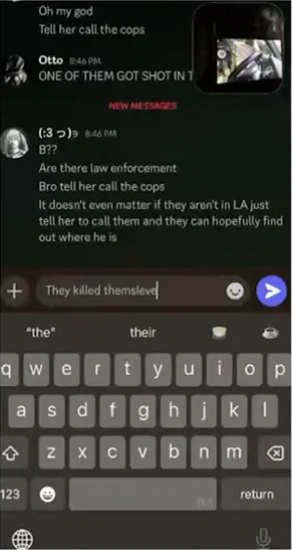
By the time Otto responded five minutes later, the attack was over. One of the teenage gunmen, Cain Clark, 17, had shot and killed the other, 18-year-old Caleb Vazquez, before turning the gun on himself. That sequence was also captured in the footage.
Viewers may have been located overseas
CBS News could not independently verify the locations of those who watched the video, though details visible in the recordings suggest some may have been situated far from California, where the attack took place.
In Otto's screen recording, VodafoneAL — an Albanian mobile carrier — appeared on the device, and the phone's time zone corresponded to local time in Albania, suggesting Otto may have been watching from overseas.
A time zone visible on Noelle's device was set three hours ahead of San Diego, suggesting the user may have been in the Eastern time zone.
Online relationships and extremist communities
Noelle appeared to be in some form of online relationship with one of the shooters, according to Barrett Gay, a digital research analyst at the Institute for Strategic Dialogue, who reviewed the online activity of the shooters as well as those connected to them.
Both gunmen had been active in fringe communities on mainstream social media platforms, according to Matthew Ivanovich, a senior research manager at the same organisation.
Authorities have said they believe the two teenagers met online and discovered they both lived in the San Diego area before meeting in person, CBS News previously reported.
The pair shared a nihilistic mix of antisemitic, anti-Muslim, misogynistic, anti-Hispanic, anti-gay and anti-trans hate rhetoric in what the FBI described as a "manifesto." The document opens with an antisemitic rant repeating the phrase "IT'S THE JEWS."
The pair appear to have referred to themselves as the "sons" of the perpetrator of the 2019 mass shooting at a mosque in Christchurch, New Zealand — an attack that killed 51 people and was also livestreamed by its perpetrator.
Platform responses
Discord said on Thursday that it had preserved information related to the attack and disclosed it to law enforcement, and that it would continue to work closely with authorities.
"We share in the San Diego community's grief and extend our condolences to the families of the victims and to everyone impacted by this tragic violence," a Discord spokesperson said.
"Discord strongly condemns violence and we have strict policies against anyone who supports, promotes, or engages in violent acts. We found no evidence that the livestream of this event originated on Discord."
Expert warnings on online extremism
The case has drawn significant attention from researchers who monitor how online platforms handle violent content.
"The attack in San Diego is another deadly reminder that any threat assessment in this country has to account for the increasing violence that we're seeing and the online platforms that really enable this to exist," said Oren Segal, senior vice president of counter-extremism and intelligence at the Anti-Defamation League.
Segal noted that a growing number of attackers now prepare livestreams and manifestos alongside their weapons, describing it as part of a subculture of nihilistic violent extremism.
"Certainly in America you can be as hateful as you want to be. We have that protection for freedom of speech here," Segal said.
"But when we see incident after incident of violence against religious institutions and at schools that have a through line, which is a set of websites that normalize this in which the attackers, including these attackers are signaling back to these online communities, it makes you wonder whether we need to take a much harder stance legally or otherwise against them."