Study finds cat owners face twice the odds of schizophrenia development
Scientists say more high-quality research is needed before any firm conclusions can be drawn
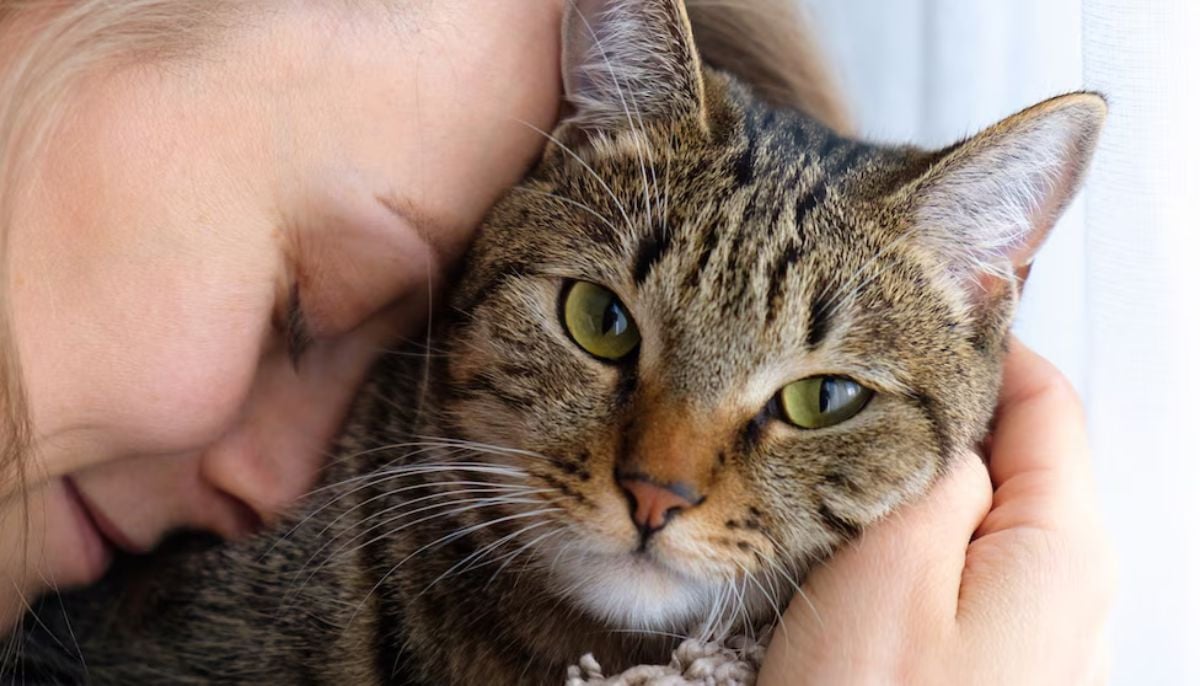
A major review of scientific literature has found that owning a cat may be associated with a heightened risk of schizophrenia-related conditions — but researchers are urging caution before drawing firm conclusions.
What the 2023 review found
The analysis, published in Schizophrenia Bulletin, drew on 17 studies and concluded there was "a significant positive association between broadly defined cat ownership and an increased risk of schizophrenia-related disorders."
The idea that cat ownership could influence schizophrenia risk is not new. It was first proposed in a 1995 study, which pointed to a parasite called Toxoplasma gondii as a potential cause.
However, the body of research that has accumulated since then has produced contradictory results.
Psychiatrist John McGrath and colleagues at the Queensland Centre for Mental Health Research in Australia examined papers published over the previous 44 years, spanning 11 countries including the US and the UK.
"There is a need for more high-quality studies in this field," the authors emphasise in their published paper.
The role of Toxoplasma gondii
Some studies have suggested that exposure to cats during childhood may raise the likelihood of developing schizophrenia in later life, though not all research has reached the same conclusion.
Separately, certain papers have connected cat exposure to higher scores on scales used to measure traits associated with schizophrenia — a condition that affects a person's thoughts, feelings, and behaviour — as well as psychotic-like experiences. Yet again, other studies have failed to replicate these findings.
T. gondii is a largely harmless parasite that can spread to humans via undercooked meat, contaminated water, or contact with an infected cat's faeces. It is estimated to infect around 40 million people in the US, most of whom experience no symptoms whatsoever.
Once it enters the human body, T. gondii is capable of penetrating the central nervous system and affecting neurotransmitter activity.
The parasite has been associated with personality changes, the onset of psychotic symptoms, and certain neurological conditions, including schizophrenia.
Crucially, however, a statistical association does not prove that T. gondii causes these changes, nor that the parasite was necessarily contracted from a cat.
"After adjusting for covariates, we found that individuals exposed to cats had approximately twice the odds of developing schizophrenia," the Australian team writes.
Limitations and inconsistencies in the research
There are significant caveats to consider. Fifteen of the 17 studies examined were case-control studies — a type of research that cannot establish cause and effect and frequently fails to account for confounding variables that may have influenced both the exposure and the outcome. The researchers also acknowledged that several of the studies were of low quality.
Findings varied considerably across the body of research. Higher-quality studies indicated that associations observed in unadjusted models may have been skewed by external factors.
One study found no meaningful link between owning a cat before the age of 13 and a later diagnosis of schizophrenia, yet the very same study did identify a significant association when the window was narrowed to the ages of nine to twelve — suggesting that any critical period of vulnerability remains poorly understood.
A US study involving 354 psychology students found no connection between cat ownership and schizotypy scores.
However, participants who had been bitten by a cat did register higher scores compared to those who had not.
A separate study, which included participants both with and without mental health conditions, also found a link between cat bites and elevated scores on tests measuring particular psychological experiences — though the researchers suggested other pathogens, such as Pasteurella multocida, could be responsible.
Calls for better, broader research
McGrath and his team made clear that a thorough and rigorous review of all available research on these topics is essential before any conclusions can be considered settled.
"Our review provides support for an association between cat ownership and schizophrenia-related disorders," the authors conclude.
"There is a need for more high-quality studies, based on large, representative samples to better understand cat ownership as a candidate risk-modifying factor for mental disorders."