Bodyweight exercises to build strength, muscle after 50
Fitness experts say bodyweight training can still effectively build strength after 50
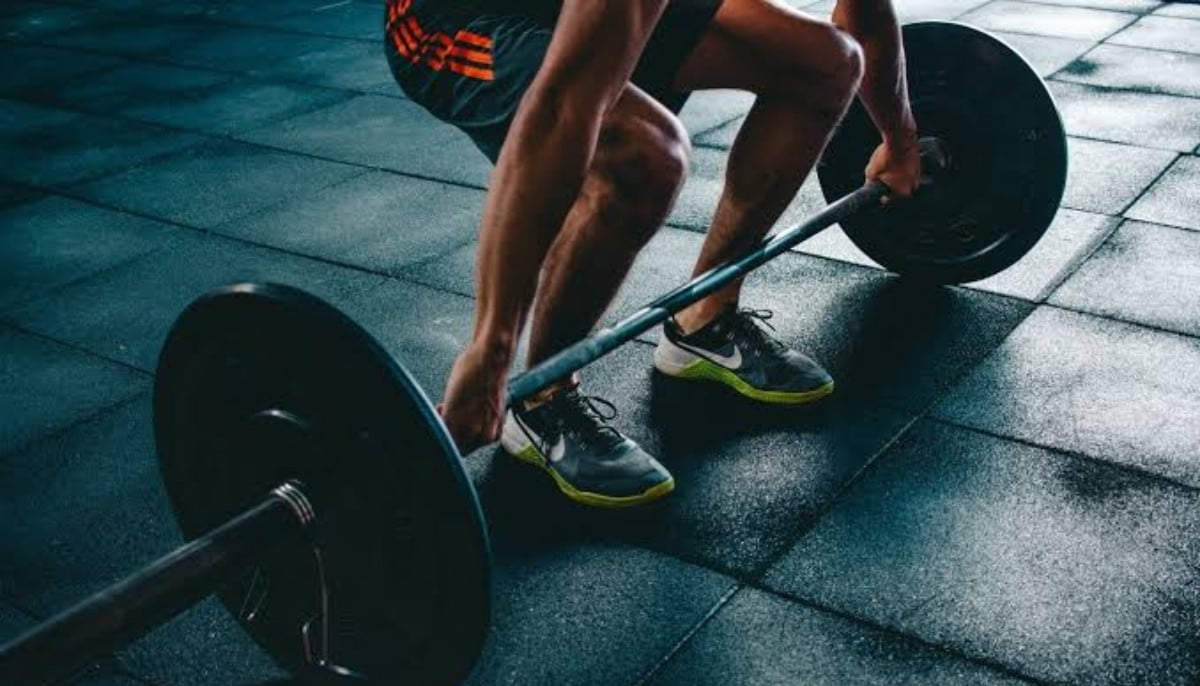
Bodyweight exercises can still play a powerful role in building and maintaining muscle after the age of 50, fitness experts say, provided movements are performed with progressive overload and proper technique.
According to certified strength and conditioning specialist Jakob Roze, bodyweight training uses the resistance of a person’s own mass to build strength, improve mobility and support joint stability without requiring free weights.
He noted that progress is still possible by increasing repetitions, slowing movement tempo, improving range of motion or progressing to more challenging variations.
Push-Ups Build Upper-Body Strength
The push-up remains one of the most effective bodyweight exercises for upper-body strength, targeting the chest, shoulders, triceps and core.
Roze explained that the movement is highly efficient for maintaining muscle mass with age.
To perform a push-up, individuals begin in a high plank position, lower the chest toward the floor while keeping the body straight, and press back up through the hands.
For beginners or those finding the movement challenging, modified versions such as knee push-ups can provide a more accessible starting point.
Band-Assisted Pull-Ups Strengthen the Back
Pull-ups are widely considered one of the most effective exercises for developing the back, shoulders, arms and grip strength.
However, they can be difficult for beginners, which is why Roze recommends using resistance bands for assistance.
By looping a band around a pull-up bar and placing a foot or knee into it, individuals can reduce the load and gradually build strength before progressing to unassisted repetitions.
The exercise also supports posture by strengthening pulling muscles that are often underused in daily life.
Split Squats Improve Balance and Lower-Body Power
Split squats are a unilateral lower-body exercise that targets the quadriceps, glutes, hamstrings and calves.
They are particularly beneficial for older adults because they also enhance balance, coordination and stability, all of which are important for fall prevention and mobility.
Roze noted that the movement can be performed using bodyweight alone, making it accessible without equipment while still delivering significant strength benefits.
Squats Reinforce Functional Movement Patterns
Squats are considered a foundational movement for building strength in the legs, hips, glutes and core.
They also replicate everyday actions such as sitting down and standing up, making them highly functional for daily life.
Beginners can modify the movement by performing chair squats, where they gently tap a chair before standing back up, gradually progressing to deeper ranges of motion as strength improves.
Dead Bugs Strengthen the Core and Protect the Spine
The dead bug exercise targets deep core muscles that support spinal stability and posture.
Unlike traditional abdominal exercises such as sit-ups, the dead bug trains the body to resist movement, which can help reduce strain on the lower back.
The movement involves lying on the back, extending opposite arm and leg slowly, and returning to the starting position while maintaining core engagement.
Progressive Overload Remains Key
Experts emphasise that even without weights, muscle growth can still occur through progressive overload techniques such as increasing repetitions, slowing tempo, improving range of motion or selecting more challenging variations.
However, they also note that bodyweight training may eventually reach limitations due to fixed resistance, making exercise selection and progression strategies essential for continued improvement.
Despite these limitations, bodyweight training remains a practical and effective approach for improving strength, stability and functional fitness later in life.