Home / Technology
China's EV price battle evolves into AI tech race beyond costly cars
Chinese electric vehicle companies are swiftly introducing in-car AI features to gain a competitive advantage
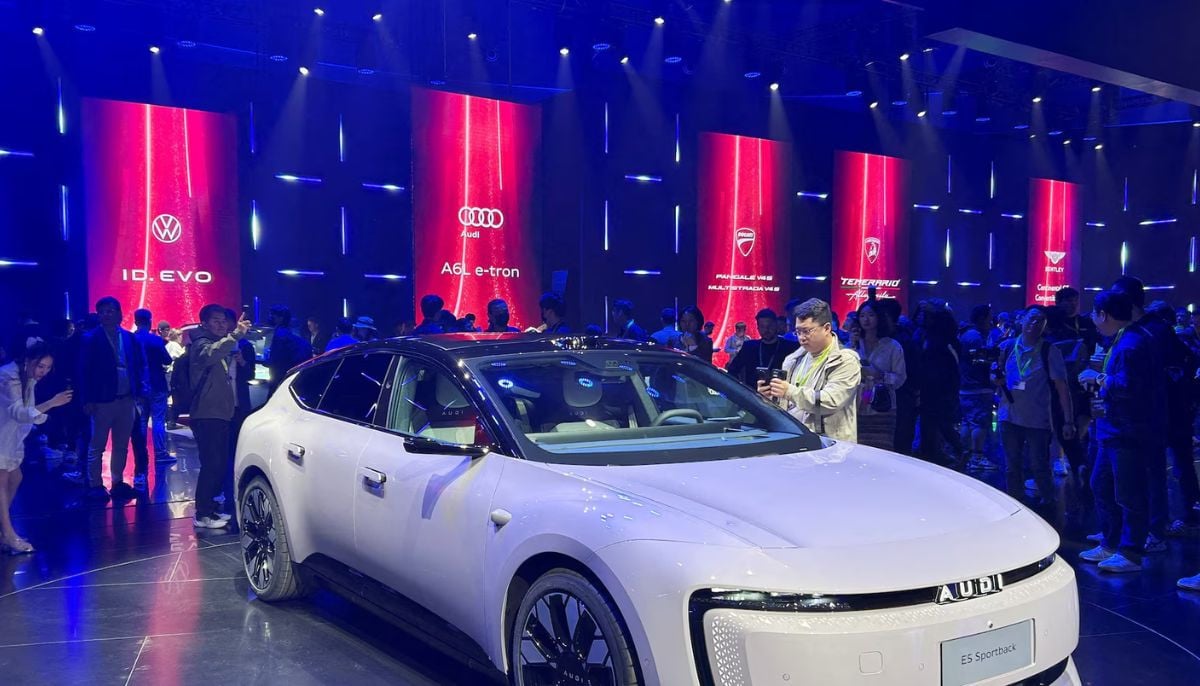
In China, electric car manufacturers are adding more artificial intelligence (AI) features in an effort to withstand a prolonged price battle in the globe's largest car market.
In recent years, the rivalry has moved from improving battery range to unveiling driver-assist systems and employing more advanced automotive chips.
Now, the focus is on equipping vehicles with a range of onboard AI capabilities.
More than 50 automotive brands have adopted ByteDance's Doubao AI model, as announced by its cloud service Volcano Engine last Friday at the Beijing auto show. The tech division was situated next to the robotaxi specialist Pony.ai.
This means Doubao is now part of 145 car models and is installed in over 7 million vehicles, according to Volcano Engine.
Besides local cars, Doubao AI has also been incorporated into new models from foreign brands like the all-electric Mercedes-Benz GLC, the SAIC Audi E7X, and the SAIC Volkswagen ID. ERA 9X.
"We are committed to rolling out new features more swiftly," Fermín Soneira, CEO of the Audi and SAIC Cooperative Project, informed journalists earlier this month before the auto show. He highlighted the ability of carmakers to send tech updates remotely, or "over-the-air."
Despite the fast introduction of new features, car manufacturers are consistently under pressure to boost sales.
"The challenges won't ease up much because the production capacity is in place," he remarked. "This price battle isn't expected to end in the immediate future."
The progression towards AI mirrors consumer interest in connected features, like smartphone interfaces compatible with Huawei or voice assistants like Doubao.
So far, ByteDance's Doubao is the most predominantly utilised AI chatbot in China, boasting over 155 million users weekly as of earlier this year, as per consultancy Chozan.
At the auto show, Volcano Engine's exhibit featured demonstrations of AI technology for cars in both Chinese and English.
According to Stephen Dyer, partner and managing director, and leader of AlixPartners' Asia automotive and industrial consulting branch, the price competition has evolved into a contest over cockpit technology.
The downside, however, is that these innovations rapidly become widespread, making it challenging for firms to differentiate themselves.
Among the 20 top-selling electric vehicle models in China, those priced at or above CNY 100,000 ($14,645) had similar driver-assist and in-car entertainment functions, AlixPartners found.
With "technology, keeping pace and advancing is crucial because it quickly becomes standard, leaving little room to maintain a unique offering for long," Dyer stated.
Instead, he forecasts that Chinese brands will increasingly compete with unique "outside-of-the-car experiences," akin to luxury brands providing exclusive lifestyle offerings.
For instance, Chinese automaker Nio provides its customers with exclusive access to select products and clubhouses in addition to cars with luxurious interiors.
The Chinese electric vehicle firm has faced challenges from the cost of these perks and slower market growth.
Nonetheless, Nio recently claimed that its ES8 is the first vehicle model in the industry's 400,000 yuan-and-above segment to reach 100,000 units in just 215 days.