Home / Technology
Amazon's smartphone return: Chief's cryptic words fuel speculation after Fire Phone disaster
Amazon devices chief Panos Panay fuels rumours of a new AI-powered smartphone
Amazon’s head of devices, Panos Panay, has addressed swirling rumours about a new AI-powered smartphone. His cryptic comments have only intensified speculation, more than ten years after the company's first disastrous attempt.
'It's a tricky question'
Panos Panay, Amazon’s chief of devices and services, has given a curious response to questions about the company's potential re-entry into the smartphone market. When asked directly if a new phone was in the works, Panay was evasive. "It's just not the goal," he said, according to a recent interview. "I know there's a lot of rumours out there."
Pressed for a simple yes or no, Panay acknowledged the difficulty of the question. "A lot of people want me to say no, but a lot of people want me to say yes, I get it," he explained. "Here's my take: it's not necessarily [that] we're going after a phone, no." He added that a flat "no" would be accurate but also "misleading," suggesting that whatever Amazon is developing might not fit the traditional definition of a smartphone. Much of his long-winded answer to the question hinted at a "transformation" of the current phone form factor over the next decade.
Amazon 'Transformer' project
The speculation stems from reports from earlier this year that a team within Amazon, known as ZeroOne, was developing a new device codenamed "Transformer". It was previously reported that this project was exploring an Alexa-enabled AI phone, which would heavily feature a more advanced version of the company's voice assistant, Alexa Plus. The vision is said to be a device that moves away from traditional app stores, instead using a powerful AI interface to access everything from shopping to streaming services. Some reports even suggested the team explored minimalist "dumbphone" designs, perhaps as a companion device rather than a direct competitor to the market leaders. While Amazon has not officially confirmed the project's existence, Panay's comments about "a whole new set of form factors" seem to align with these ambitious rumours.
A painful history: The Fire Phone flop
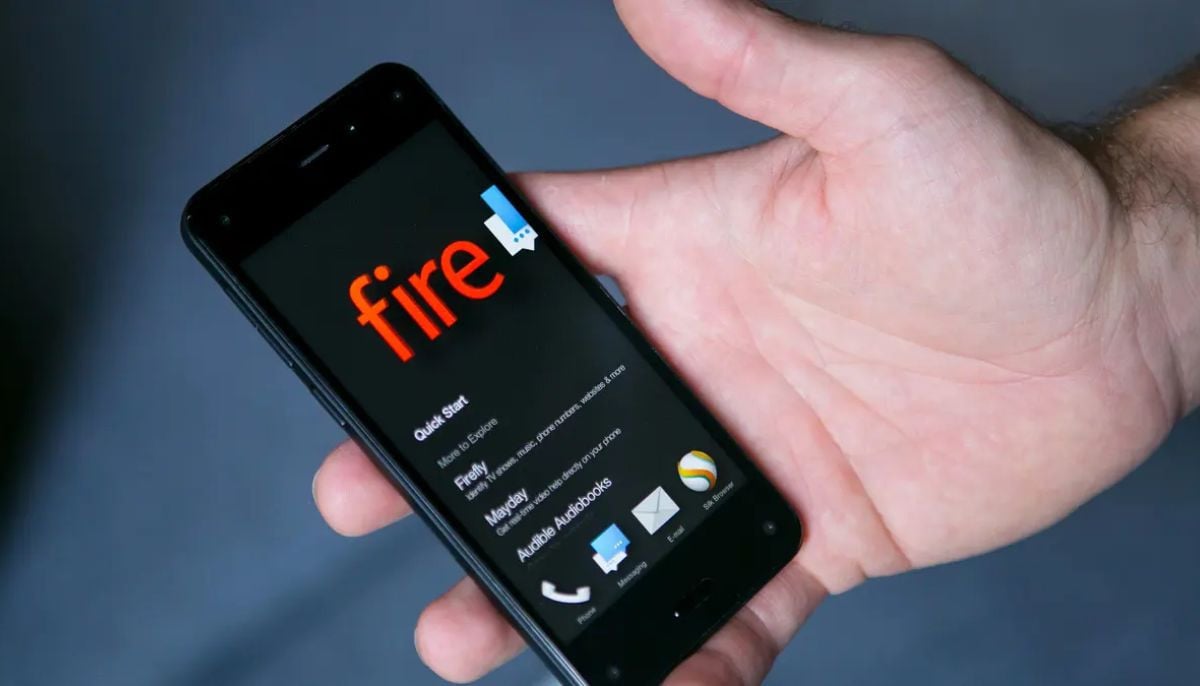
Amazon's caution is well-founded, given the company's first and only attempt at a smartphone. The Amazon Fire Phone, launched in 2014, was a commercial catastrophe that resulted in a massive financial blow for the tech giant. Just months after its release, in October 2014, the company was forced to take a $170 million write-down on costs related to the device and was left with an estimated $83 million in unsold phones. Analysts at the time believed that as few as 35,000 units were sold in its first couple of months on the market.
Several key factors contributed to the Fire Phone's failure. It launched at a premium price of $650 unlocked, placing it in direct competition with the established iPhone and Samsung Galaxy lines without offering a compelling reason to switch. Its operating system, a modified version of Android called Fire OS, lacked access to the Google Play Store, meaning popular apps like Gmail and Google Maps were missing.
Its headline feature, "Dynamic Perspective," which used four cameras to create a 3D effect, was widely dismissed as a gimmick. To make matters worse, it was exclusive to a single carrier in the US, drastically limiting its potential customer base.
A different world in 2026
The challenge of breaking into the market has only grown since 2014. The smartphone landscape in 2026 remains dominated by Apple and Samsung, who command a huge portion of the global market. The first quarter of 2026 saw Apple actually increase its market share in the US while overall Android sales fell, highlighting the difficulty for any new Android-based competitor. Furthermore, the industry is currently facing serious headwinds, including rising component costs and memory shortages that are expected to drive up retail prices.
However, one major trend could play into Amazon's hands: the rise of on-device artificial intelligence. The newest phones heavily integrate AI for everything from camera enhancements to real-time translation, a shift that perfectly matches the rumoured AI-centric approach of the "Transformer" project.
For now, it seems Panay, who also oversaw the release of the Microsoft Surface Duo, is not in a hurry to launch another conventional smartphone. His focus remains on ambient AI and strengthening Amazon's existing ecosystem of Echo speakers, Fire TV, and Kindle devices.
While a new Amazon phone may not be on the immediate horizon, Panay's careful words suggest the company is actively exploring what the next generation of mobile, AI-powered devices could look like. After the epic failure of the Fire Phone, Amazon is clearly playing its cards very close to its chest this time around.