Home / Entertainment
Peter Jackson defends AI in filmmaking, says it cost Andy Serkis an Oscar
Peter Jackson claims AI fear cost Andy Serkis an Oscar for Gollum. The director defends AI in film at Cannes while preparing for The Lord of the Rings: The Hunt for Gollum
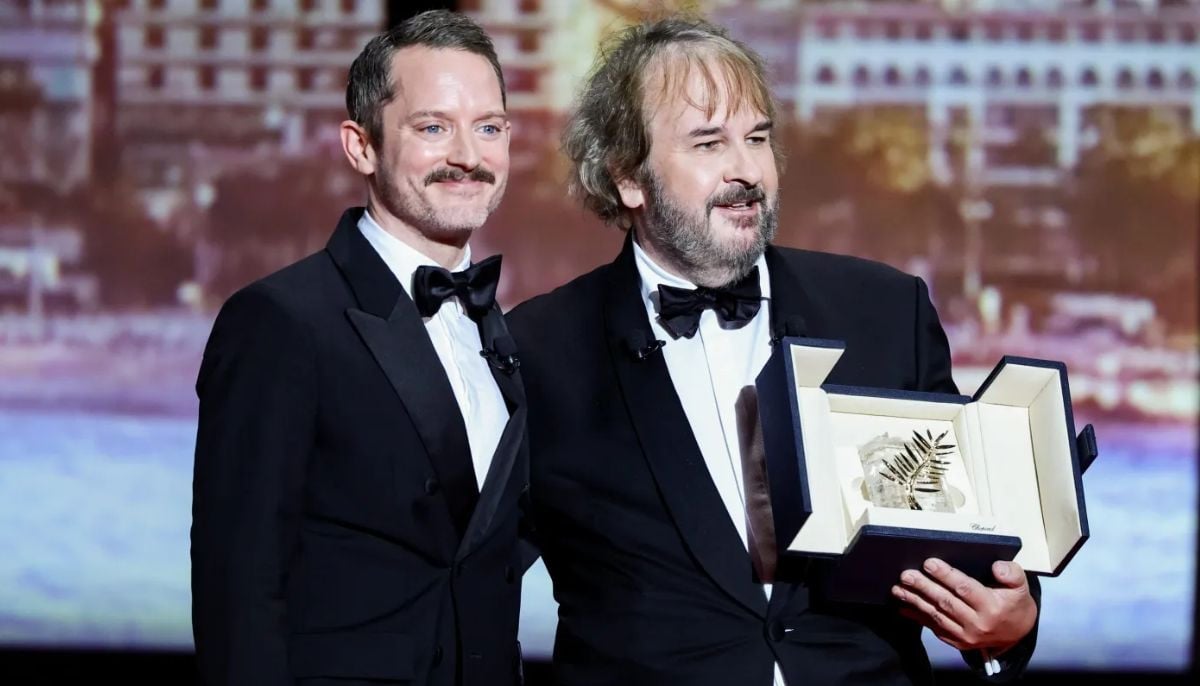
The Lord of the Rings director has thrown his support behind artificial intelligence (AI) in filmmaking, revealing he believes the technology is misunderstood. Peter Jackson claims the widespread fear of AI is the real reason motion-capture legend Andy Serkis never won major awards for his iconic role as Gollum.
'It's just a special effect'
Peter Jackson, the celebrated director behind the acclaimed and successful adaptation of The Lord of the Rings, has weighed in on one of Hollywood's most contentious topics. Speaking at a Cannes Film Festival masterclass, the filmmaker said that while he thinks AI is “going to destroy the world,” when it comes to cinema, “I don't dislike it at all.”
Jackson’s remarks, made in mid-May 2026, came just a day after he was honoured with an Honorary Palme d'Or at the prestigious festival. He argued that AI should be viewed simply as another tool in a filmmaker's kit, stating, “To me, it's just a special effect; it's no different from other special effects.”
However, he was quick to draw a firm line on the ethics of its use, particularly concerning actors' likenesses, a key point of conflict during the 2023 Hollywood strikes. “If you're doing an AI duplicate of somebody, like Indiana Jones or anyone else, as long as you've licensed the rights off the person who you're showing, I don't see the issue,” Jackson explained. “It's when people's likenesses get stolen and usurped.”
The real reason for the Oscar snub
The director went on to connect the current climate of fear around AI to a long-standing awards injustice. He sensationally claimed this apprehension is the primary reason actor Andy Serkis was never recognised with a major award, like an Oscar, for his groundbreaking motion-capture performance as Gollum.
“A lot of the current environment, everyone's so worried about AI. I don't think a Gollum-type character or a generated character has any hope for winning any awards,” Jackson said. He called the situation “a bit unfair,” especially in Serkis’s case.
Jackson stressed that the performance, which is now considered the gold standard for motion-capture, was entirely human-driven. “It's not an AI-generated performance, it's a human-generated performance 100% of the way,” he insisted. While Serkis’s portrayal of Gollum failed to secure an Oscar nomination, his pioneering work has been celebrated with other honours, including a BAFTA for Outstanding British Contribution to Cinema in 2020.
A return to Middle-earth
The debate is more relevant than ever as Andy Serkis is set to reprise his iconic role. He is returning to Middle-earth to direct and star in a new film, The Hunt for Gollum, with Peter Jackson on board as a producer. Jackson revealed at Cannes that he felt Serkis was the only person for the directing job.
“The film is about Gollum's psychological addiction. I thought, 'Andy knows this guy better than anybody.' So I actually didn't think much of myself [directing the new movie]. I thought the most exciting version of this movie is if Andy Serkis makes it.”
Hollywood's AI-powered future
Jackson’s comments come as artificial intelligence rapidly moves from an experimental concept to an operational tool in the film industry. Studios are increasingly using the technology to streamline production, from script analysis in pre-production to de-ageing effects in post-production.
The Oscar-nominated film The Brutalist reportedly used generative AI to enhance accents, while director Doug Liman claimed to have slashed a film’s budget from a projected $300 million to $70 million by using AI-generated backgrounds. At the same time, deep concerns remain about its impact on industry jobs, with some projections suggesting that over 200,000 entertainment positions could be affected by 2026.
Jackson's bold statements have reignited a fierce debate across Hollywood, placing the celebrated director at the centre of the conversation about cinema's technological future and the very definition of a screen performance.