Home / Lifestyle
Tom Davies’ devastating MND diagnosis sparks call for safer rugby
The young athlete hopes his story will push for safer protocols in rugby and other contact sports
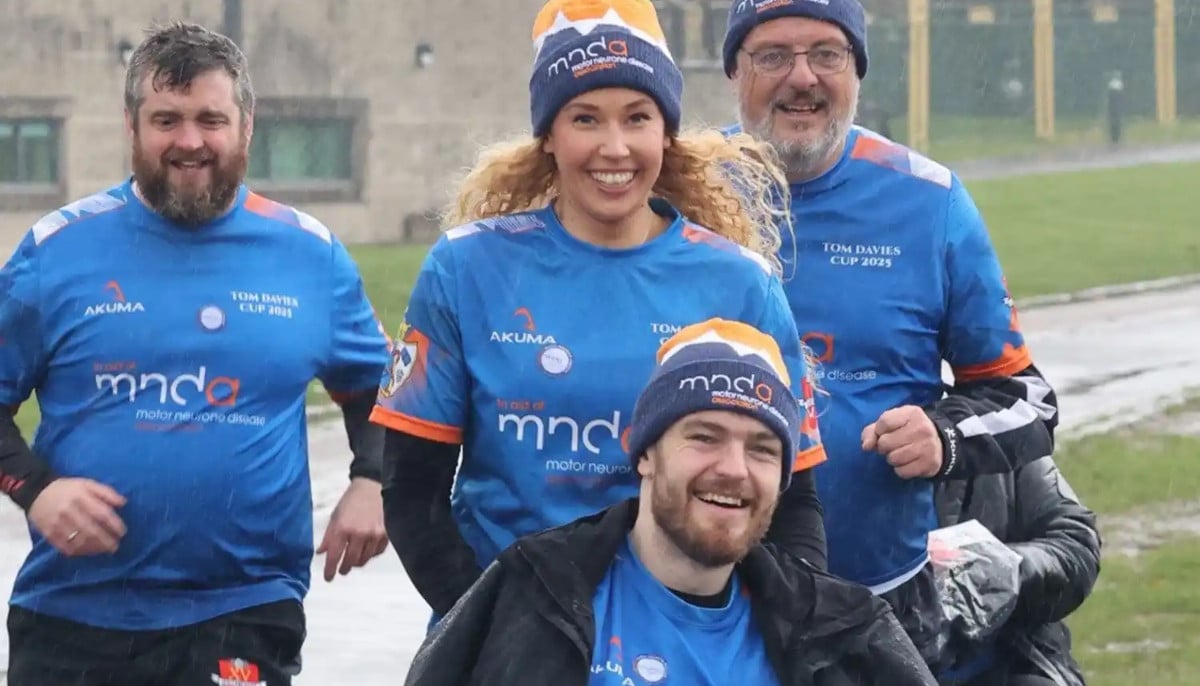
Tom Davies, 29, a former rugby player from Sheffield, England, now relies on a wheelchair and a feeding tube after being diagnosed with motor neuron disease (MND), a degenerative neurological condition that affects movement, speech, and swallowing.
Davies first noticed changes in his speech and hand strength in the summer of 2024.
Encouraged by his girlfriend, Alex Ross, he saw a neurologist, and in July 2024, he received the devastating diagnosis.
“The diagnosis was pretty devastating. It’s not something I was expecting as MND is rare, especially under the age of 50, and I was only 29,” Davies told The Star.
While there is no definitive proof linking rugby to MND, medical experts and studies suggest that repeated head injuries in contact sports can increase the risk of neurodegenerative diseases.
A 2022 study by the University of Glasgow found rugby players were two and a half times more likely to develop these conditions and up to 15 times more at risk for MND.
“I never thought that I would get any long-term brain-related issues from playing. My only concern was that I might get some joint or muscle problems later in life,” Davies said.
Now 30, Davies uses a wheelchair due to limited arm and hand function and relies on a feeding tube for nutrition.
Despite these challenges, he maintains a positive outlook. “I try to focus on what I’m doing day-to-day and week-to-week and plan lots of fun things to do,” he said.
Ross, his girlfriend, praised his resilience: “It’s certainly challenging at times. MND is such a cruel disease.
One of the hardest things is the uncertainty. We have no idea what kind of time scales we’re looking at, which makes planning for the future impossible. We just take it one day at a time.”
Davies’ former rugby teams are honoring him with a charity fundraiser, The Tom Davies Cup, on April 25, which will raise money for the MND Association and the University of Sheffield Institute for Translational Neuroscience.
“I’m honestly quite overwhelmed by how much all the rugby clubs have rallied round,” he said. “They started planning this big fundraising day right when I was diagnosed. It’s really touching.”
Though his disease has forced him to step back from the sport he loves, Davies hopes future safety measures will protect other athletes.
“Ultimately, we don’t know much about why some people develop MND, but I think more research into potential links with rugby is crucial. I hope governing bodies continue to adapt and make changes as new evidence emerges.”