Home / Technology
Elon Musk and Jeff Bezos compete for dominance in private space race
NASA Artemis missions seek to return human astronauts to the moon by 2030
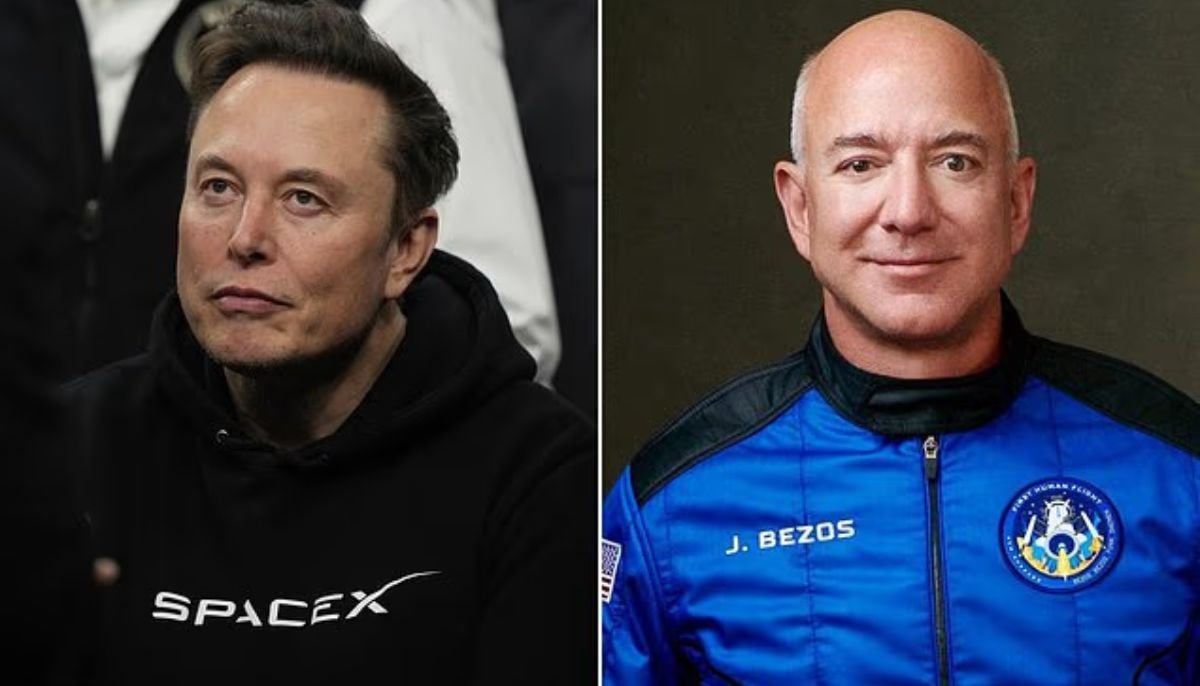
The contemporary space race has expanded beyond national governments, as private aerospace firms led by billionaires Elon Musk and Jeff Bezos compete for critical NASA contracts.
While Musk’s SpaceX currently maintains a dominant position through its Falcon 9 launch services and "fail fast" development strategy, Bezos’ Blue Origin is rapidly positioning itself to narrow the gap.
Using a methodical "slow is smooth" philosophy, Blue Origin recently deployed two Mars-bound satellites for NASA using its New Glenn rocket, which is designed for commercial and orbital efficiency.
Both organisations are now heavily invested in the Artemis programme, which aims to return humans to the lunar surface by 2030.
Although SpaceX was initially contracted for the Starship Human Landing System, project delays prompted NASA to engage Blue Origin as an additional provider for lunar landers.
Consequently, Blue Origin has paused its New Shepard space tourism flights to focus entirely on lunar cargo.
"The launch will act as a precursor to designs," officials noted regarding an upcoming cargo vehicle mission intended to test designs for future astronaut returns.
The competition extends into the digital realm, with both firms seeking to establish space-based AI data centres.
In February, Elon Musk proclaimed the SpaceX-xAI merger was meant to form "the most ambitious, vertically integrated innovation engine on (and off) Earth, with AI, rockets, space-based internet."
While SpaceX seeks permission for a massive satellite network, Blue Origin has filed for 52,000 satellites equipped with AI computing payloads. This rivalry marks a significant shift from the 1960s era of state-led exploration.