Home / Technology
Spaceflight changes how astronauts perceive gravity: Study
Scientists studied how astronauts handle and move objects in space's microgravity compared to on Earth
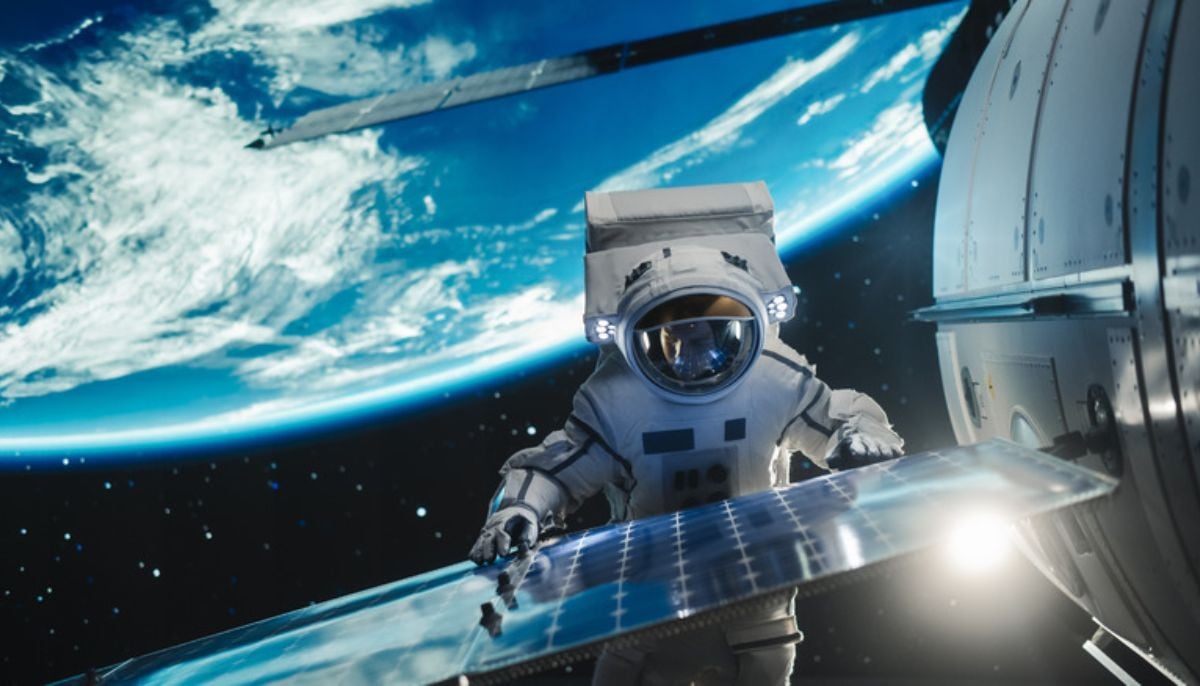
Upon their return to Earth, astronauts often need time to readjust to gravity.
A widely shared video shows astronaut Tom Marshburn humorously criticising gravity while trying to suspend a pen in the air, but it parodies a genuine phenomenon that occurs after lengthy space missions, according to a new study that's been two decades in development.
Scientists from the Catholic University of Louvain in Belgium and the Basque Foundation for Science in Spain studied how astronauts handle and move objects in space's microgravity compared to on Earth.
The research included two female and nine male astronauts who spent over five months aboard the International Space Station (ISS).
Despite months of zero gravity, the study revealed that "gravity's influence endures" in how astronauts handle items, indicating it takes time for the brain to adapt that muscle memory.
On our planet, we grip items mainly to prevent them from dropping. In space, where gravity isn't a factor, holding objects is primarily for moving them, not suspending them.
To evaluate these differences, astronauts performed a series of exercises to assess their grip, movement, and ability to prevent slipping when handling a specially designed tool.
These tasks were repeated multiple times before, during, and after their mission on the ISS.
In one task, astronauts pinched the object between their thumb and forefinger and moved their arm up and down, synchronised with a metronome at times.
In another task, the object was secured upright on a platform as participants moved their grasp up and down while holding it between their thumb and forefinger.
This helped scientists assess the astronauts' perception of the minimal grip needed to prevent slipping.
Without gravity, arm movements were generally slower (unless timed with the metronome) and more even, with equal force used in both upward and downward movements.
However, even after several months in zero gravity, astronauts still gripped objects more tightly than necessary, as if preparing to counteract gravity.
Although in space their grip didn't change much, upon their return to Earth they showed signs of adjusting back to gravity's pressures.
"Curiously, some astronauts mentioned that the object seemed heavier than anticipated," the authors reported.
"The strong grip-force association developed through years on Earth can become altered after a long period in a weightless environment."
Just after a day back on Earth, astronauts resumed the asymmetric movements seen in the first task: more force is required to lift than lower an object. While their bodies readjusted quickly, their brains still made some wrong mass predictions.
"The gradual and incomplete shifts when switching between different gravitational contexts illustrates the predictive function of the neural mechanisms supporting these actions," the authors clarified.
The study was featured in The Journal of Neuroscience.