Review of 'Ashes': Diego Luna directs an uneven migration drama
Bound by a shared language and complex history, 21-year-old Mexican nanny Lucila feels out of place in Madrid
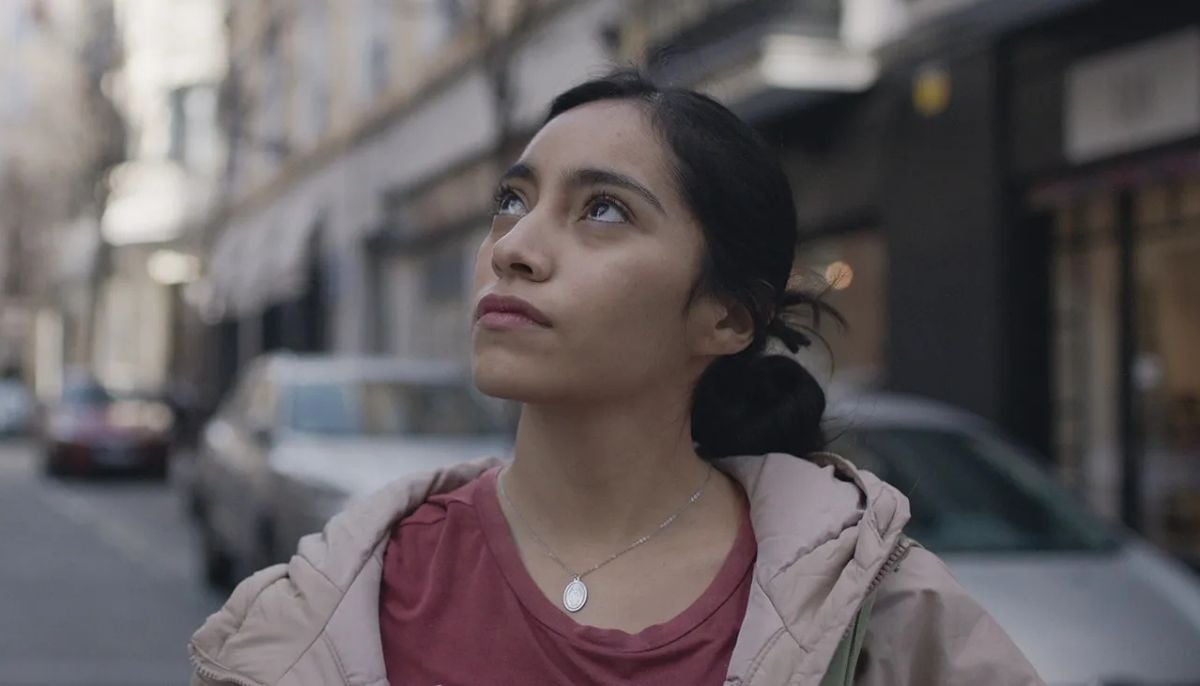
Bonded by a shared tongue and a turbulent history, 21-year-old Mexican caregiver Lucila (Anna Diaz) finds herself feeling out of place in Madrid. She and her younger brother joined their mother in relocating from their Mexican hometown. "Ashes" mirrors these general themes from the book it draws inspiration from—Brenda Navarro’s expressively titled “Ceniza en la boca,” or “A Mouthful of Ash.” However, even if one hasn't read the novel, it's possible to discern the scattered approach of Diego Luna’s film adaptation. The storyline unfolds like a narrative where much is left in the shadows or between the edits, the performances stand out, but it's like laying the emotional groundwork in reverse.
New directors can often be excused for some of these missteps, yet many viewers might not be aware that this is Luna's fifth attempt at directing. Although he has achieved significant success as a prominent part of the “Star Wars” offshoot “Andor,” his abilities behind the lens are constrained. It would seem sensible to begin with his strengths, as Luna does in this instance: He excels at drawing out strong performances and usually capturing their nuances. Diaz excels in the starring role, portraying a young woman navigating life in Spain amidst cultural and legal hurdles. Her energetic, curious, assertive, sensuous, and eventually sorrowful portrayal brings Lucila to life at every turn, even when Luna’s filmmaking toolkit doesn’t quite keep pace.
From the onset, there’s an underlying sense that something isn’t quite right. “Ashes” flits erratically through different moments in time, barely allowing the weight of events to settle. Just as Lucila and her brother Diego (Sergio Bautista) are heartbreakingly left by their mother during childhood, the Spanish backdrop takes centre stage, and without much pause, thrusts us into Lucila’s young adulthood nearly ten years on, lacking even a brief moment of retrospection. Admittedly, the actors are adept enough to weave these intimate elements into (and beneath) their dialogues, but specifics are frequently introduced into these voids long after they arise, forming a type of scattered storytelling that acts more as a mental challenge than an emotional journey.
Navigating between Lucila’s romantic ventures, her role as a nanny, her second job delivering food, and the network of Latin American nannies forming her social group, the narrative barely finds room to effectively outline her familial circumstances. Details emerge quickly and sparsely — her mother resides with a female partner; Diego exhibits behavioural issues at school, necessitating Lucila to care for him — yet this portrayal of a broken household lacks depth. There’s often an absence of “what” or “why” regarding these events, and even when pivotal changes unfold, the burden lies on Diaz’s performance, as her responses work intensively to imply possibilities that we need to piece together over time before understanding the true events. In this way, the story drifts among different plot threads, each receiving the same level of attention as Lucila moves back and forth among them. “And then, and then, and then…”
Luna possesses the right instincts within his confined narrative framework, allowing his camera to naturally follow Diaz, though partially because he seems uncertain of its placement elsewhere. Lucila’s mother (Adriana Paz) is shown in a somewhat indifferent manner, drawing a camera that dithers regarding her existence within the scene, outside of it, or lingering on its periphery, thereby diminishing the film’s composition and its edits concerning Lucila, of their potential strength.
Eventually, as we accompany Lucila back to Mexico for a sorrowful family reunion, the late plot twist exploring how “home” transforms just as much as its people does becomes too disjointed in tone and visuals to bridge the events and locations effectively, as both main settings are inadequately developed. The physical and logistical steps of Lucila’s journey make intuitive sense, but the emotional path she takes remains too obscure to create a significant impact, despite Diaz’s ability to evoke profound life amidst the film’s portrayal of existing on the outskirts.