Arnaud Desplechin's starry English-language film 'The Thing That Hurts' makes a splash at Cannes market
Desplechin describes the film as a bittersweet comedy in the vein of Wes Anderson's The Royal Tenenbaums
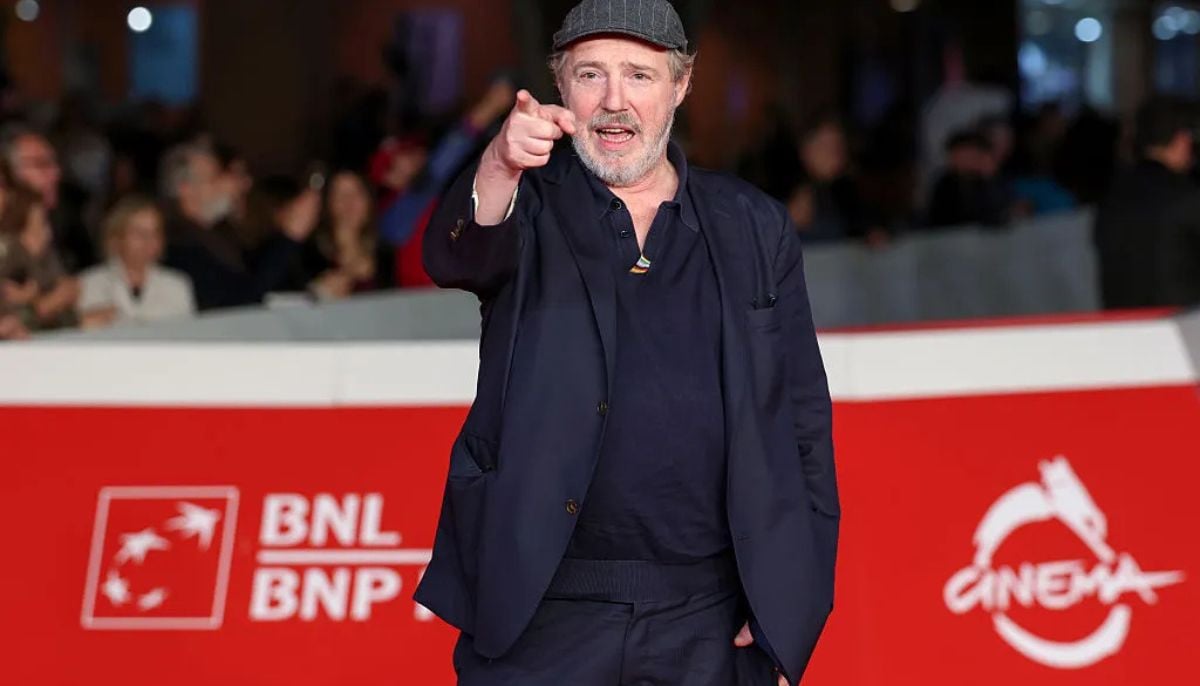
Arnaud Desplechin may not be attending Cannes this year in person, but his forthcoming English-language production The Thing That Hurts is generating considerable excitement at the market through Gravel Lake Entertainment.
The film boasts the most high-profile cast of Desplechin's career, with Alfre Woodard, J.K. Simmons, Jason Schwartzman, André Holland, Noémie Merlant, Golshifteh Farahani, Teddie Allen, and Felicity Jones all attached.
The story centres on the clients of a celebrated American psychoanalyst who converge on Paris following news of her death, with unexpected connections forming and long-buried truths surfacing as their individual stories become intertwined.
A departure on multiple fronts
The project marks a significant departure for Desplechin in terms of its production set-up. Puerto Rico-based 3SIX9 Studios — represented by Daya Fernandez, Amaury Nolasco, and Alois Rubenbauer — are producing his work for the first time, alongside French producer Charles Gillibert at CG Cinema, who previously produced his penultimate feature Filmlovers!, Atilla Yücer at Turkey's Alaz Film, and Belgium's Wrong Men. The screenplay was co-written by Desplechin and Kamen Velkovsky, with Wes Anderson serving as executive producer. The film is financed by Silver Screen Global.
"I was born to make this film"
Speaking to Deadline as the film launched at the market, Desplechin was characteristically emphatic about the project's personal significance.
"I was born to make this film. For over 30 years I've been reading about psychoanalysts, visiting shrinks, and talking about it with friends. It was a pitch that was proposed to me by Kamen Velkovsky, with whom I wrote Two Pianos, but this time we were writing in English. He writes beautifully. To that point, J.K. Simmons said, 'How can I say no to such a well-written script?' That was Kamen," he said.
Desplechin also addressed those who have long pressed him to make a straightforward comedy.
"People have often asked me, when I made My Sex Life… Or How I Got Into An Argument, or A Christmas Tale, for example, 'When are you going to make a real comedy?' Well, here it is. It's a comedy, a bittersweet comedy," he said, describing it as an ensemble piece in the tradition of A Christmas Tale, and drawing a comparison to Wes Anderson's The Royal Tenenbaums — a film that handles weighty themes such as death, divorce, and suicide whilst keeping audiences laughing throughout.
Alfre Woodard as the psychoanalyst
At the heart of the film is Alfre Woodard, who plays the psychoanalyst whose death sets the story in motion.
"It was bold of her to accept the role because she didn't know Kamen or me," Desplechin said, citing her work in Grand Canyon, Spike Lee's Crooklyn, and the lesser-known arthouse film Clemency as touchstones for his admiration of her. "She has real gravitas, an authority, which is truly wonderful."
He described how Woodard's character interacts differently with each of her patients, with each encounter revealing a distinct facet of her personality — an approach he compared to Catherine Deneuve's role in A Christmas Tale. "I called them my Seven Samurai on set," he said.
Felicity Jones in a comic role
Desplechin was particularly effusive about Felicity Jones, whose performance he described as "incredible, incredible."
"We've recently seen her in The Brutalist, in a very, very tragic role. Here she's in a comic role," he said. "I don't want to spoil things, but one of her last lines in the film is 'To Life', 'L'Chaim'. That's the spirit of her character. She has another line I love, 'When I sparkle, I will sparkle.' It's a side of her we don't know much about, her comedic side."
Why Paris and not New York
Asked why the story — populated largely by American characters — was set in Paris rather than New York, Desplechin was clear.
"No, because there's one very contemporary aspect of the film, which resonates with me: they're all expatriates, people living in a foreign country, and that's why they talk to each other," he explained. Alfre Woodard's character, he noted, is "the most in exile of the entire film" — an African American New Yorker who has chosen to settle in France and practise psychoanalysis in a distinctly French manner.
Golshifteh Farahani plays a rebellious woman from Iran, whilst Noémie Merlant portrays the only French character in the group — one who has herself spent considerable time in Japan.
How Wes Anderson came on board
Desplechin and Anderson share a longstanding friendship that began at a screening of Darjeeling Limited in France. It was, however, producer Atilla Yücer — who had worked with Anderson on Asteroid City — who extended the invitation for him to join as executive producer.
"I would never have dared," Desplechin admitted. "And it came together from there."
American funding made the film possible
Desplechin credited producer Charles Gillibert as the driving force behind getting the project off the ground in Europe, describing him as "extremely tenacious." However, because the film is in English, the French financing system proved ill-suited to the project. It was the involvement of 3SIX9 Studios that ultimately made production viable.
"It was when we found American funding, thanks to 3SIX9, that the film suddenly became possible," he said, adding that lead producer Daya Fernandez's on-set presence every day was unlike anything he had experienced in his European career.
A reflection of political anxiety
Desplechin also reflected on the broader phenomenon of American talent gravitating towards Europe, connecting it directly to the political climate in the United States under Donald Trump's second term.
"I think with the political developments we're seeing in the United States, the country is changing in a way that is irreversible. The country will never be the same again," he said, citing the war in Iran, controversies surrounding Greenland, and immigration enforcement as sources of deep unease among his American friends.
The theme of exile runs throughout the film. In one of its most resonant moments, J.K. Simmons' character announces his intention to return to the United States following the death of his psychoanalyst. His fellow expatriates react with disbelief — to which he responds simply: "F--k it, I'm going. It's my home."