Elon Musk vs Sam Altman: From best friends to fierce rivals
In the 11 years since Elon Musk and Sam Altman co-founded OpenAI, their once close relationship has unraveled, leading to courtroom battle between two billionaires
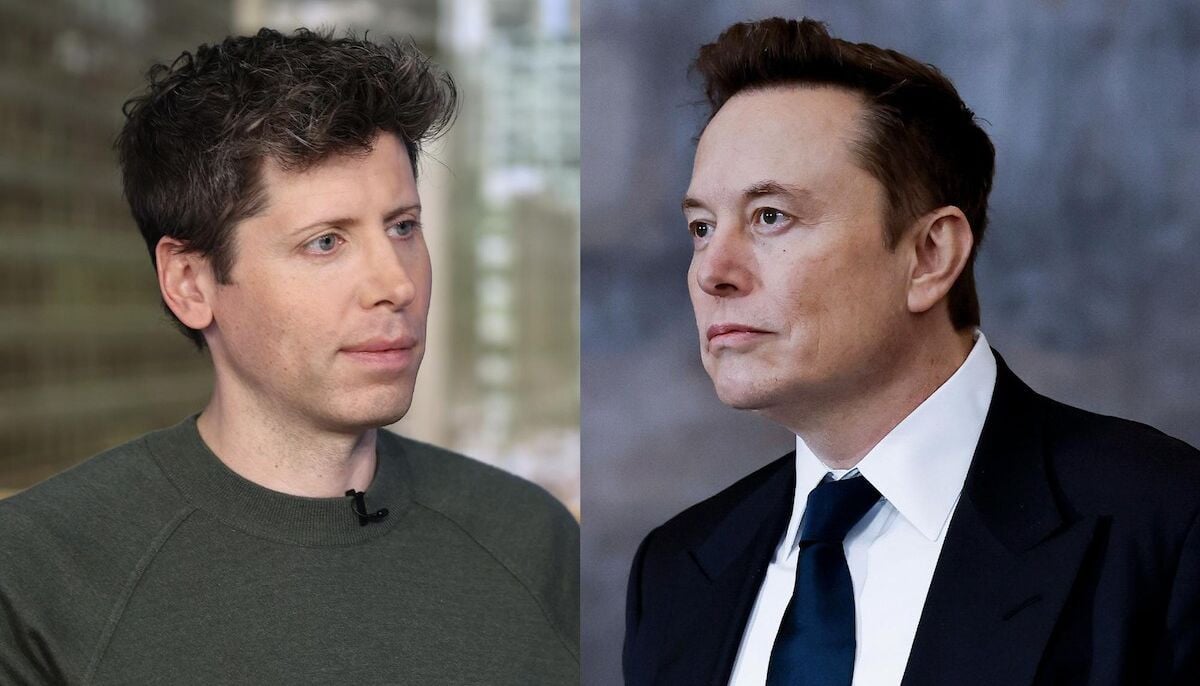
In December 2015, Elon Musk and Sam Altman were seated together at the Vanity Fair New Establishment Summit held in San Francisco for an interview, enthusiastically promoting their new alliance as co-chairs of a nascent AI research laboratory.
Musk, a billionaire due to his investments in Tesla, which went public five years back, and Altman, managing the well-known startup accelerator Y Combinator, had teamed up that year on an AI project aimed to stop Google from gaining monopolistic dominance in the field. Their initiative, established as a nonprofit, was named OpenAI.
In the last three weeks, the breakdown of the once-significant bond between these leading AI figures has been at the heart of a well-publicised trial in Oakland, California, after Musk filed a lawsuit against Altman and OpenAI in 2024 for allegedly breaching their agreement to keep OpenAI a nonprofit. Presently, OpenAI holds a valuation exceeding $850 billion, while Musk's SpaceX is valued at $1.25 trillion following its merger with his AI venture, xAI, in February.
Both organisations are rushing towards the public market, with SpaceX anticipated to unveil its prospectus potentially this week, ahead of what might be a historic offering next month. Before addressing eager investors, Musk was required to present his case to a jury in downtown Oakland, with the aim of proving his point and, if victorious, potentially hindering OpenAI's ambitious objectives.
"You can't have it both ways," Musk remarked on April 29, in response to the questioning by OpenAI's counsel. He accused Altman and Greg Brockman, OpenAI's president and a co-founder, of benefiting from a charitable organisation while simultaneously seeking the positive perceptions associated with operating a nonprofit.
Musk utilised his time at the witness stand to underscore a point he's been vocal about on his social media app X, now also owned by SpaceX, over the years: OpenAI wouldn't exist without him.
"I conceived the idea, coined the name, recruited the crucial individuals, imparted all my knowledge, and provided the initial funding," Musk stated.
Last week, Altman testified that he and his co-founders had made no promises to Musk regarding the firm's corporate structure.
He highlighted that one significant issue from the early days was Musk's intense desire to have complete control over OpenAI, at least initially, partly stemming from Musk's distrust in others making decisions.
"I was extremely uneasy with it," Altman testified regarding Musk's power ambitions.
Attorneys for Musk and OpenAI finished their closing arguments on Thursday after three weeks of proceedings. A jury will begin considering the arguments on Monday to ascertain the legitimacy of Musk's claims and whether OpenAI, Altman, and Brockman should be held accountable for breach of charitable trust and unjust enrichment.
Irrespective of the final decision, neither of the tech titans are likely to come out favourable in the public's eyes, said Stavros Gadinis, a professor at the University of California, Berkeley Law School.
"After weeks of damaging testimonies, the public is left choosing between two feuding billionaires, each convinced they are the rightful guardian of a transformative technology," Gadinis commented via email. "Most people are inclined to conclude: neither."
The beginning
The collaboration began 11 years ago, in May 2015, with Altman emailing Musk, asking for his thoughts on Y Combinator initiating a "Manhattan Project for AI." Musk acknowledged that the idea was "probably worth a conversation."
OpenAI was launched in December 2015, with Musk pledging to finance the charity with up to $1 billion.
"I'm extremely impressed with everyone thus far," Musk wrote to Altman in November 2015, referencing emails revealed during the case's discovery phase. "This is a phenomenal team."
By 2017, issues started to surface. Although OpenAI was making strides in R&D, Musk insisted that Altman and other founders, including Brockman and Ilya Sutskever, generate a list of staff and their critical contributions and terminate anyone who didn’t immediately meet expectations, according to court documents.
OpenAI was depleting funds and required significantly more for computing resources. Leaders discussed transforming the lab into a for-profit entity. The debate on who should be CEO and control shares, particularly for Musk, who wanted as much as 90% ownership of a for-profit entity, was significant.
Altman and other founders declined, reasoning that no single entity or person should retain absolute control over "artificial general intelligence," a technology that could surpass human intelligence.
Tensions peaked in June 2017, when Tesla recruited Andrej Karpathy, an AI expert, from OpenAI. In text exchanges between Musk and his colleagues, including OpenAI board member Shivon Zilis and project director Sam Teller, Musk's team applauded the recruitment, as evident from documents disclosed during discovery.
Attorney Steven Molo questions his client Elon Musk as OpenAI CEO Sam Altman observes, during Musk's lawsuit trial over OpenAI's shift to a for-profit structure, overseen by U.S. District Judge Yvonne Gonzalez Rogers in a federal court in Oakland, California, U.S., on April 29, 2026, in a courtroom sketch.
Zilis, who has four children with Musk, testified earlier this month, faced questioning by lawyers on both sides regarding discussions about OpenAI's corporate set-up around 2017 and 2018, and if Tesla attempted to recruit OpenAI staff while she was on the board.
Following an OpenAI attorney presenting Zilis's text messages with her celebrating Karpathy's acceptance of Musk's job offer, Zilis admitted Musk made initial contact with Karpathy.
Musk subsequently apologised to his OpenAI co-founders, "offering an apology and a confession," as Brockman recalled during his testimony.
Despite internal upheaval, OpenAI's technology was progressing. By August 2017, its systems managed to defeat the best in the world at Dota 2, a complex multi-player action game. Musk highlighted the achievement on Twitter.
"OpenAI first ever to outplay world's top players in competitive eSports," Musk posted. "Significantly more intricate than traditional board games such as chess & Go."
A month later, he informed Altman and other OpenAI leaders in an email that he'd "had enough." If he couldn’t possess control of OpenAI, he threatened to leave.
"Either go pursue your path or persist with OpenAI as a nonprofit," Musk articulated in an email revealed in court documents. "I will not continue funding OpenAI until a strong commitment to stay is shown or I'm just being a fool essentially offering free funding for you to launch a startup."
Musk halted his regular monetary contributions to the company. Contrary to his $1 billion pledge, his donations summed around $38 million.
'Tesla is an automobile manufacturer'
With OpenAI desperately seeking assistance, Musk, Zilis, and Teller made one last push to incorporate the lab under Musk's governance, suggesting it should merge with Tesla. To persuade Altman, Musk's team invited him to explore a Tesla factory and promised him a Tesla board position.
Testifying, Altman expressed that he didn't find the idea suitable and worried the nonprofit might essentially be dismantled if assimilated into Tesla.
"Tesla is an automobile manufacturer, and it doesn’t share OpenAI's mission," Altman said on the stand. "I don't believe we would've had the chance to guarantee the mission was fulfilled."
After rejecting the merger proposal, Musk wrote in a December 2018 email to Altman and OpenAI leaders that his "risk assessment of OpenAI being pivotal to DeepMind/Google without a substantial change in strategy and resources is 0%. Not 1%."
Musk testified that the for-profit branch OpenAI established has become the "tail wagging the dog," infringing upon the founding charity's mission and the promises the founders allegedly made to him.
Musk departed from the OpenAI board in 2018, a departure that OpenAI stated in a blog post was meant to "avoid a potential future conflict for Elon" as Tesla began to emphasise AI more.
For the subsequent five years, Musk rarely spoke of OpenAI publicly. Any rifts between him and Altman were mostly absent from social media.
Altman regularly praised Musk on Twitter, remarking in 2019 that "wagering against Elon is historically unwise," and commenting in October 2022, that Musk is "a reminder of the tremendous impact one person can have."
This latter post emerged a month before OpenAI revealed ChatGPT. That marked a turning point, as the surge in generative AI led to increased investments in the sector. In January 2023, Microsoft injected $10 billion into OpenAI, clearly signalling the onset of the race towards commercialisation. A for-profit subsidiary had already been formed by OpenAI.
Musk started criticising Altman and OpenAI on the internet. He vented in a Twitter post, which Musk owned by that time and later renamed to X, about the startup's investments and its collaboration with Microsoft:
"OpenAI was founded as an open-source (which is why I named it 'Open' AI), nonprofit organisation to counterbalance Google, but now it has turned into a closed-source, maximum-profit company primarily governed by Microsoft," Musk expressed in a post in February 2023. "Not my intended outcome at all."
Altman replied with a text brought to light in a court filing.
"I am exceedingly grateful for everything you've provided—OpenAI wouldn't have come to be without you—and it deeply pains me when you publicly criticise OpenAI," Altman wrote to Musk, as per court documents.
Musk remained unyielding. By March 2023, he registered xAI, aiming for it to rival OpenAI, even overtly recruiting from OpenAI. Zilis, now having children with Musk, stepped down from the OpenAI board.
She had been inclining towards this decision the preceding month, sharing in a text with a friend that, "When the father of your children launches a rival effort and aims to recruit from OpenAI, nothing else can be done."
Following his 2024 lawsuit submission, Musk has intensified his rhetoric against his OpenAI co-founders, mostly via his platform of choice, X, labelling the leading figures as "Scam Altman" and "Greg Stockman".
"I could have launched OpenAI as a for-profit entity," he commented in a post on X just as the trial commenced. "Instead, I pioneered it, financed it, enlisted essential talent, and imparted all my entrepreneurial insights FOR THE PUBLIC BENEFIT. Then they hijacked the charity."