Home / Crime
Sotomayor criticises SCOTUS for ignoring key evidence in teen pizza driver's murder
Sotomayor stated that it was illogical for Supreme Court to essentially release James Skinner's accomplice
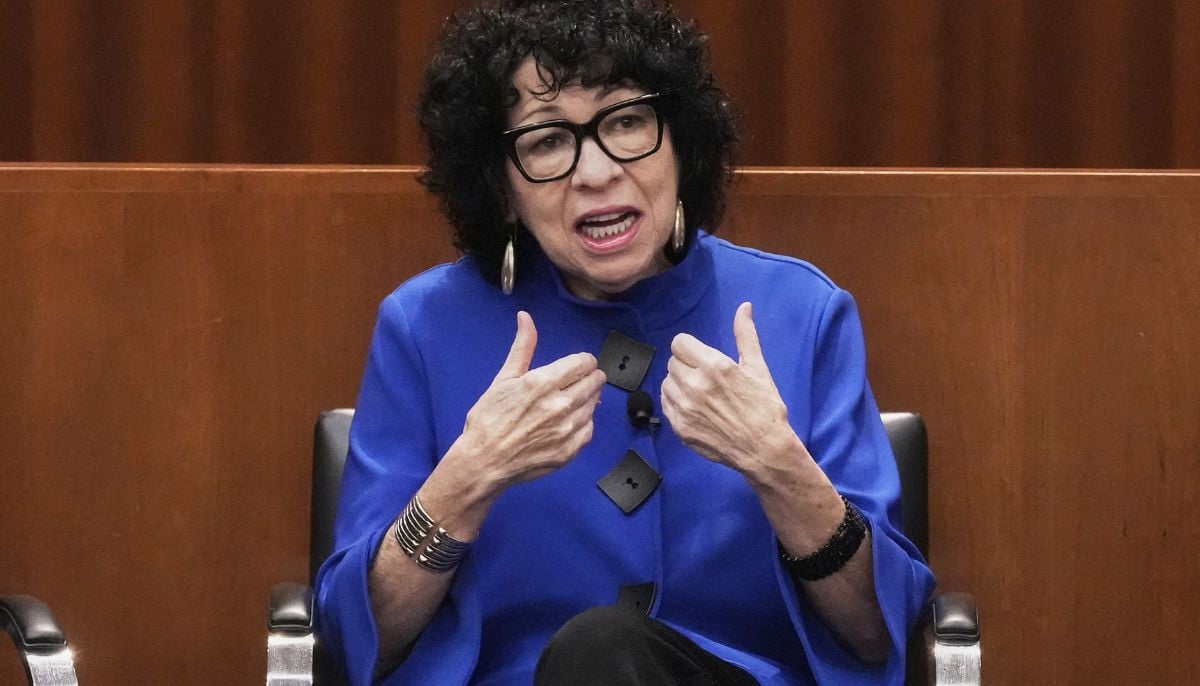
Justice Sonia Sotomayor expressed a strong disagreement on Monday as the US Supreme Court decided not to review the case of a man receiving a life sentence for the 1998 murder of a young pizza delivery worker in Louisiana, accusing her fellow justices of not upholding "its own precedents."
With only Justice Ketanji Brown Jackson supporting her stance, Sotomayor stated that it was illogical for the Supreme Court to essentially release James Skinner's accomplice from death row with a decision ten years prior but let Skinner remain imprisoned for life without parole, despite both men being convicted for the murder of 16-year-old Eric Walber based on "similar sets of evidence, focused on the same pair of eyewitness accounts."
"Equal justice under law, inscribed on the front of this Court's building, demands that two codefendants, convicted of the same offense, and presenting almost identical constitutional claims, receive the same response from the courts," Sotomayor explained.
"In this situation, because the Louisiana courts failed to apply this Court's Brady precedents, including a decision by this Court involving the exact same evidence, Skinner faces spending his lifetime in prison while [Michael] Wearry goes free," Sotomayor remarked.
"As the Court declines to enforce its own precedents, I respectfully dissent from the denial of certiorari."
Under Brady v. Maryland, prosecutors are required to disclose "Brady material," which is evidence favorable to the defense.
Suppressing evidence that plays a crucial role in determining a defendant’s guilt or punishment violates their constitutional right to due process, the Supreme Court decided in 1963.
The Brady violations concerning Michael Wearry were so blatant that the Supreme Court concluded his conviction and death sentence must be overturned in 2016, and a fresh trial was deemed "necessary."
A major issue was what the prosecution concealed from the defense about their key witness, a "jailhouse informant" named Sam Scott who, two years post-murder, claimed minor responsibility in Walber's death while implicating Wearry, Skinner, and others.
That narrative not only changed significantly but also contained erroneous basic facts. For example, the witness claimed Walber was killed by gunfire — however, evidence demonstrated that on that day in April 1998, the Albany High School football player was covering a shift at Pizza Express for a colleague and was beaten and then run over by his car, as reported by local CBS network WAFB. Skinner was allegedly driving the car.
Further elaborating on why the Supreme Court regarded Scott's account as "unreliable," one version mentioned Randy Hutchinson — who had "recently undergone knee surgery due to a torn knee tendon" nine days earlier — as running after the pizza delivery boy.
Adding to the issues, Scott had made remarks behind bars indicating he wanted to "'ensure [Wearry] receives the death penalty because he betrayed me,'" an inmate shared. The defense and jury were unaware of this information.
"Undoubtedly, the newly disclosed information is enough to cast doubt on Wearry's conviction," concluded the Supreme Court, excluding Justices Samuel Alito and Clarence Thomas, at that time.
"The State's main trial evidence resembles a flimsy house of cards, reliant on the jury's belief in Scott's testimony over Wearry's alibi."
Nevertheless, there wouldn't be another trial, since Louisiana prosecutors, acknowledging the slim chances of convincing a jury against this backdrop, negotiated a deal with Wearry, which allowed him to regain freedom by 2023 with time served.