Prince Harry's stark warning: 'Lethal violence' threatens UK amid 'deeply troubling' antisemitism
Prince Harry warns of a deeply troubling rise in UK antisemitism and lethal violence, urging the public to distinguish between legitimate protest and prejudice
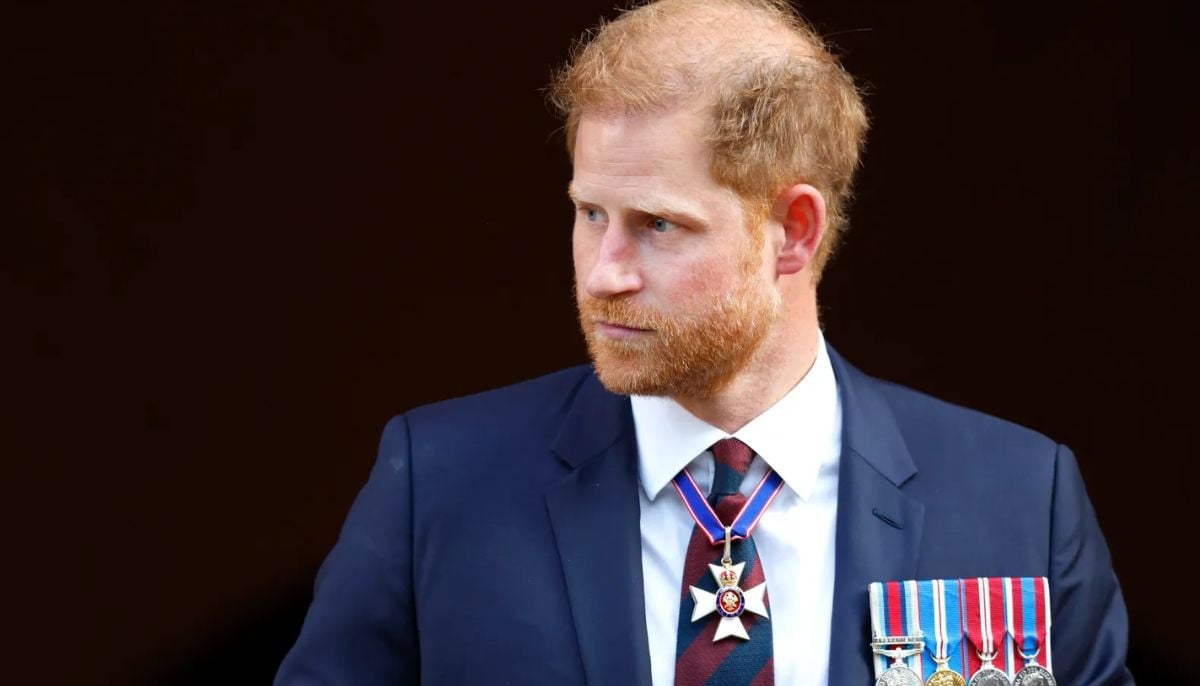
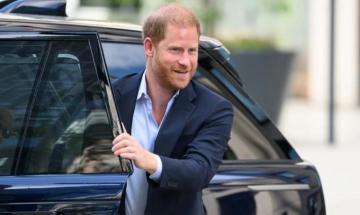
Prince Harry has spoken out in a powerful new piece, condemning the rise of hatred that has gripped the nation. He is urging people to distinguish between legitimate protest and prejudice before division deepens further.
'Hatred is not protest'
In an opinion piece titled "my fears for a divided kingdom", the Duke of Sussex has issued a grave warning about a "deeply troubling" rise in antisemitism in the UK, which he says has led to "lethal violence" against the Jewish community. While acknowledging the importance of "legitimate protest" against the actions of a state, Prince Harry insisted that people must be clearer about where they are aiming their anger.
"Nothing, whether criticism of a government or the reality of violence and destruction, can ever justify hostility toward an entire people or faith," he wrote in the New Statesman. The prince cautioned that "hatred directed at people for who they are, or what they believe, is not protest. It is prejudice". He added that he felt compelled to speak out because staying silent allows "hate and extremism to flourish unchecked".
The duke's intervention comes as pro-Palestinian marches have faced renewed scrutiny, with the government stating antisemitic activity has taken place during some protests.
A community living in fear
The duke’s words come against a chilling backdrop of real-world violence and soaring community tensions. His article referenced a string of recent attacks at synagogues and other Jewish sites, including the stabbing of two Jewish men in the north London neighbourhood of Golders Green on 29 April. That incident was so serious that the UK's terrorism threat level was raised to "severe", meaning another attack is now considered "highly likely".
The fear of "lethal violence" is not abstract; in a devastating attack on Yom Kippur in 2025, two people were killed at a synagogue in Manchester, an event the Community Security Trust (CST) described as the first fatal antisemitic terror attack it had recorded since 1984. This sustained threat has had a profound impact, with a report from the Institute for Jewish Policy Research finding that 47 per cent of British Jews now view antisemitism as a "very big problem", a dramatic increase from just 11% in 2012.
This has led to a growing sense of insecurity, with many feeling the need to hide their Jewish identity.
The sobering statistics
Prince Harry’s concerns are echoed by alarming data and other senior figures. The UK's Director of Public Prosecutions, Stephen Parkinson, also noted a "deeply troubling rise" in antisemitic incidents in May 2026, vowing to use the "full force of the law" against perpetrators. Data from the CST shows a stark picture, with 3,700 antisemitic incidents recorded in 2025, a 4% increase from the previous year and the second-highest annual total ever documented. For the first time, every single month of 2025 saw more than 200 incidents reported.
This national crisis has prompted action from the top, with Prime Minister Keir Starmer describing a recent arson attack on ambulances belonging to the Jewish medical charity Hatzola as a "horrific antisemitic attack". The government has since announced £25 million in additional funding to help protect Jewish communities. The problem is also seeping into schools, with 204 school-related antisemitic incidents recorded in 2025, double the levels seen before 2023.
Learning from 'past mistakes'
In his piece, the duke candidly stated he had learned from his own "past mistakes", an apparent reference to a 2005 incident when, aged 20, he was heavily criticised for wearing a Nazi uniform to a "Native and Colonial" themed fancy dress party. At the time, Harry publicly apologised for what he described as "a poor choice of costume". His intervention now appears to come from a place of reflection, as he attempts to untangle the confusion in public debate that he believes "fuels division".
While he mentioned the actions of a "state" throughout his piece, he did not name Israel, instead stressing that the "onus falls squarely on the state - not an entire people". He wrote: "We cannot ignore a difficult truth: when states act without accountability, and in ways that raise serious questions under international humanitarian law – criticism is both legitimate, necessary and essential in any democracy."
Appealing for unity in a fractured nation, the duke concluded his powerful article by calling for people to confront both antisemitism and anti-Muslim hate with equal vigour.
"When anger is turned towards communities – whether Jewish, Muslim, or any other – it ceases to be a call for justice and becomes something far more corrosive," he wrote, making a final plea for clarity and compassion over prejudice.